
Why Are More Heatwave Records Being Broken Every Year? 8 Climate Factors Explained

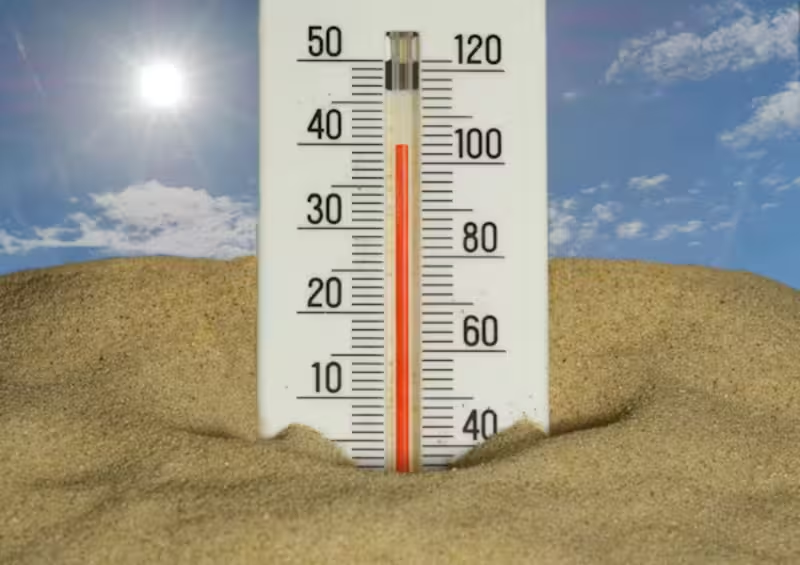
High-heat episodes have increased around the globe significantly, with record high temperatures occurring recently in places from North America to Europe to Asia. An increased frequency of record-setting heat events, longer periods of time when temperatures are at or above a record or very high level, as well as unusual weather patterns in the vicinity are all expected due to both natural cycles and human-induced carbon based climate change.
1. Rising Global Temperatures
For the past 100 years, the overall temperature of Earth has risen and is expected to continue to climb therefore the likelihood of experiencing extreme heat events will continue to increase.
2. Greenhouse Gas Emissions
Greenhouse Gases (GHG) are created when fossil fuels are combusted, which creates CO2 and other GHGs that radiate heat back into the atmosphere thereby raising the overall global surface temperature.
3. Urban Heat Islands
Cities generate and retain more heat due to the types of material used to construct buildings, streets, and lack of trees and other greenery; therefore, a city will be significantly hotter than the surrounding rural area.
4. High-Pressure Weather Systems
Persistent high-pressure systems, or “heat domes,” trap huge amounts of warm air in a given area while blocking out cooler air from moving into the area.
5. Warmer Oceans
The vast majority of the Earth’s excess heat is absorbed into the oceans. When sea surface temperatures rise, they can influence weather patterns and contribute to hotter land conditions.
6. Drier Soil Conditions
When the soil is dry there is less moisture in the soil and therefore less natural cooling through the evaporation process, causing the land to heat up more quickly than it otherwise would in hot weather.
7. Changing Rainfall Patterns
Delays or lower than average rainfall amounts can cause a region to be dry for longer periods of time, resulting in an increased chance of long-lasting heat waves.
8. More Frequent Climate Extremes
With climate change, extreme weather events are becoming more frequent and intense, including heat waves, droughts and wildfires.
Conclusion
Heat waves are breaking records more frequently than in years past due to a combination of factors. The frequency of extremely high temperatures around the globe is being elevated by global warming; increased greenhouse gas emissions; increased urban sprawl; increased average ocean temperatures; and a change in the earth’s weather patterns.
FAQs
What makes heat waves more likely to occur in today’s world than they were years ago?
Global warming and changes to the earth’s weather patterns has increased the frequency of extremely hot temperatures.
What is a heat dome?
A heat dome is a weather system that creates high atmospheric pressure causing warm air to be held above an area for days at a time.
Why is there an urban heat island effect?
Concrete and asphalt absorb more of the sun’s heat than do the rural landscapes made of natural materials, causing the urban heat island effect.
Can climate change be an exacerbating factor to heat spasms?
Climate change is a contributing factor to increasing the intensity and duration of heat spasms as quoted by climate change scientists.