
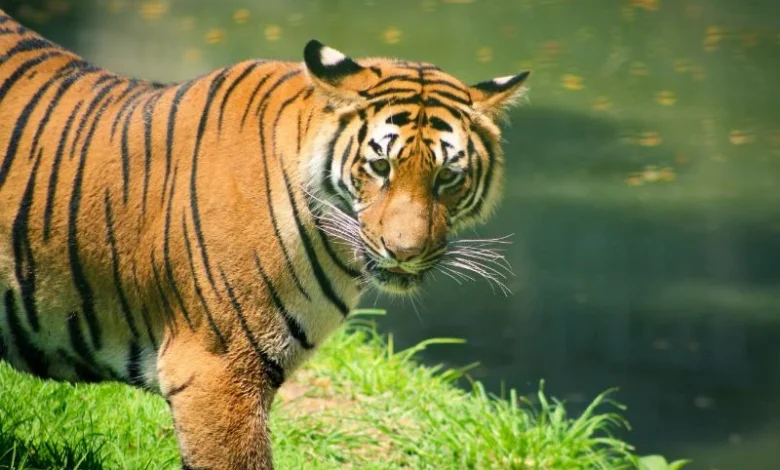
Tigers are disappearing from the wild faster than courts can punish the people responsible for killing and selling them. tiger trafficking crisis, A fresh look at tiger trafficking across Southeast Asia has exposed a wide gap between the number of arrests made and the number of people actually held accountable, something that worries conservationists who have spent years watching this species inch closer to extinction.
What the Report Found
The study, led by the GuArdean Centre for Conservation Research along with TRAFFIC and WWF International, looked at 259 tiger seizure cases recorded between 2019 and 2024 across seven countries: Indonesia, Vietnam, Thailand, Malaysia, Cambodia, Myanmar, and Laos.
Of those cases, only 110 ended with prison time or a fine. Another 35 ended in suspended sentences, meaning the accused were found guilty but still walked free. Sixty three cases had no clear outcome on record, and 48 had no public data at all.
Why Weak Prosecution Matters
This is not simply a case of missing paperwork. Researchers found that law enforcement in the region mostly catches small players such as poachers, couriers, and local traders, while the people financing and running these networks mostly stay out of reach.
Heather Sohl, who leads tiger trade work at WWF, pointed out that these groups are not acting alone. They are tied to wider wildlife trafficking networks that also deal in human trafficking and money laundering. Arrests mean little, she said, without proper investigation and strong case building in court.
A Mixed Picture Across the Region
Vietnam and Indonesia recorded the highest number of convictions, with 51 cases each resulting in some form of penalty. Yet Vietnam also accounted for most of the suspended sentences recorded in the whole study, which softens the impact of those numbers.
Thailand and Malaysia logged dozens of arrests but produced very few actual convictions. Cambodia and Laos managed only one successful prosecution each, and Myanmar reported none at all. Experts say this lack of transparency makes it extremely hard to judge how seriously wildlife crime is being treated in some parts of the region.
The Bigger Picture for Global Conservation
Rachel Boratto, the report’s lead author and head of the GuArdean Centre for Conservation Research, warned that without consistent follow through, wildlife protection laws end up being little more than words on paper. Vincent Nijman, a wildlife trade researcher not involved in the study, agreed that while conviction rates look better than for some other protected animals, they are still far too low to act as a real deterrent.
Conservationists such as Chas Barnes of Panthera argue that chasing only the low level offenders will never break the back of the trade. Real change depends on going after the people at the top, which means better investigations, stronger cross border cooperation, and courts that actually follow sentencing through.
What Needs to Change
- Governments need to invest in proper case building, not just raids and seizures
- Courts must hand out penalties that match the seriousness of organized wildlife crime
- Countries with poor data records should start publishing clear prosecution outcomes
- Regional cooperation matters, since these networks rarely stay inside one border
Conclusion – tiger trafficking crisis
Catching poachers in the forest is not enough to save wild tigers It relies on courts and governments treating wildlife trafficking like the serious organised crime it is, with penalties tough enough to actually break the networks behind it. Until prosecution catches up with enforcement, the illegal trade will continue to outpace conservation.
Stay informed on nature’s biggest global events.
How Active Is Russia’s Volcano?
Find out what triggered this rare volcanic eruption after the powerful earthquake.
Could Japan Face Another Disaster?
Dive into Japan’s ongoing efforts to tackle earthquakes and volcanic threats.
Is Vanuatu Safe To Visit?
Check out the latest travel guidance after the recent major earthquake.
Why Is The Ozone Recovering?
Uncover what the smaller Antarctic ozone hole means for the environment.
How Vital Is Ayeyarwady River?
Look into why protecting Myanmar’s lifeline is crucial for communities and nature.