Ghana Cuckooshrike Returns: ‘Lost’ Bird Spotted Again in West Africa’s Forests After 13 Years

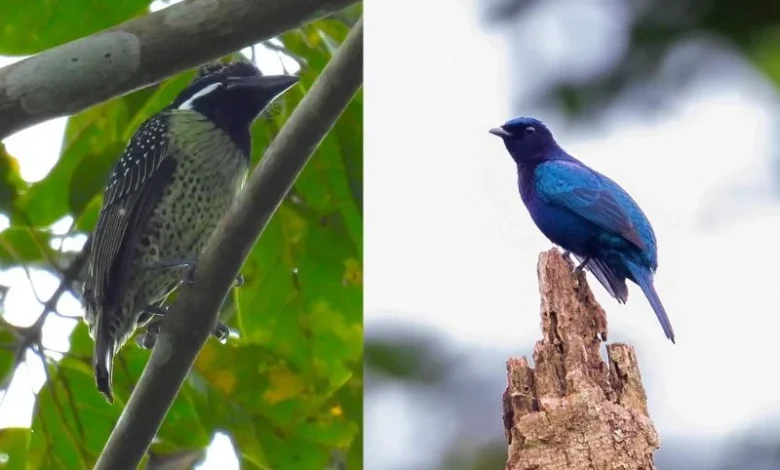
Sometimes a single photograph can change the way people think about a whole forest. That is exactly what happened when researchers walking through Côte d’Ivoire’s Taï National Park came face to face with a bird nobody had confirmed seeing in thirteen years. The Ghana cuckooshrike, known for its striking orange body and copper-marked cheeks, had quietly slipped off the radar since 2013. Its sudden reappearance has given birdwatchers, scientists and conservation groups something rare these days: genuine excitement.
The Moment of Discovery
Early one morning in June, two field researchers were walking near a small bridge inside the park when a flash of colour caught their eye high in the tree canopy. Within seconds, one of them raised a camera and captured what turned out to be the clearest photographs ever taken of this bird. The whole sighting lasted only a few minutes before the cuckooshrike vanished again into the thick forest above, but the images were enough to confirm the species was still alive.
A Forest Under Pressure
The bird’s home lies within West Africa’s Upper Guinean rainforest, a region that has lost huge areas of tree cover to logging, farming and small-scale mining over the past few decades. What was once one large, connected forest is now broken into smaller patches, making it far harder for researchers to track rare species or even know if they still exist.
Why the Sighting Matters
- It confirms the species has not gone extinct, despite years without any record.
- It shows that protected areas like Taï still hold genuine conservation value.
- It highlights ongoing threats inside the park, including illegal mining and hunting.
- It proves that patient, on-the-ground fieldwork can still uncover species modern technology alone might miss.
A Wider Message for Global Readers
This is not simply a story about one colourful bird. It reflects a challenge faced across many tropical forests worldwide, where limited funding and few researchers on the ground mean species can disappear from records for years without actually disappearing from nature. Supporting local scientists, park rangers and community-based monitoring remains one of the most practical ways to close these gaps and protect fragile ecosystems before it is too late.
Conclusion
The return of the Ghana cuckooshrike after thirteen years is a small yet meaningful reminder that hidden pockets of biodiversity still survive, even under heavy environmental pressure. Continued protection of forests like Taï National Park gives other “lost” species a fighting chance of being found again.
More stories on extreme weather.
Why Is Bangladesh Facing Flood Risks?
Find the latest climate insights.
What’s Driving India’s Weather Split?
Check out the extreme weather patterns.
Is Sonamarg Travel Safe Today?
Get to know the latest advisory.
How Severe Are China’s Floods?
Browse the latest emergency updates.
Why Is Northeast India Flooding?
Uncover the unusual jet stream effects.