Why the Northeast is Bracing for Flash Floods While Central India Burns Today—The Abnormal Jet Stream Pattern of 2026

Today, the northern part of India has lost its way through the sky and fallen towards earth due to an unusual direction of the upper jet stream’s large-scale pattern and its effect on moisture, and therefore heat.
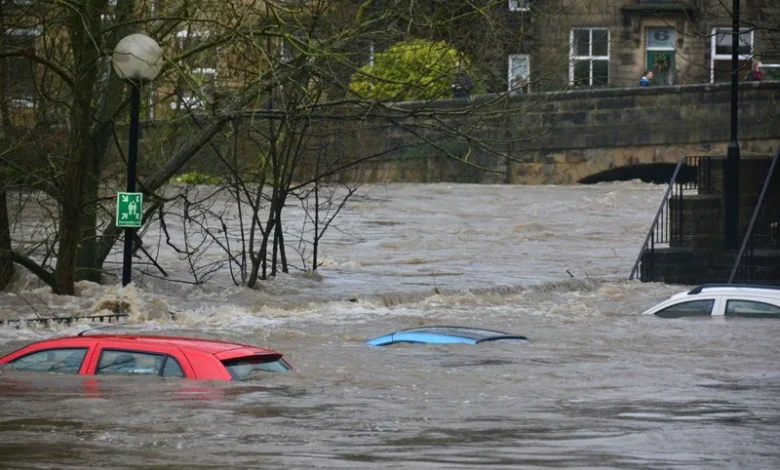
In the Northeast, the Bay of Bengal has led to an abundance of moisture in the air over the Northeast due to the upper jet stream being forced up towards the eastern sky above the area of the Northeast. This has caused the Northeast to have constant rain and flood potential.
Conversely, central India is in an upper jet stream high-pressure system, which, due to the sinking air in this area, causes no cloud formation, and therefore, all of the heat trapped at the surface in this area makes for extreme heat.
The 2026 Jet Stream Shift Explained
The jet stream is a very fast wind pattern of wind currents located millions of feet above our heads, and they create the weather below where we live, therefore creating the extreme weather we are experiencing today.
The 2026 Jet Stream is behaving in an abnormal fashion, as it has created a meandering (wavy) flow pattern rather than a smooth jet stream pattern below.
The northeastern area of India has a section of the upper jet stream that is horizontally trapped, and the effects of an area of upper jet stream pressure over the eastern part of the political boundaries of India have brought abundant rain to the northeastern area.
The western section of the upper jet stream is creating high pressure in central India, thereby not allowing any cooler air to come into the central portion of the country.
Why the Northeast Faces Flash Flood Risk?
States such as Assam and Meghalaya have extreme amounts of water due to three main reasons:
- Saturation of the soil due to continuous rain
- The hilly area of the northeastern part of India creates a fast run-off of the rain
- Rivers are rising rapidly, causing flooding
Environment Insights You Should Read
Why Indoor Air Quality Important?
Explore how plants improve air.
Why Tropical Plants Bloom Changing?
Discover impact on farming cycles.
How Warming Reshapes Coastal Living?
Check risks for island communities.
Why Central India Is Getting Hotter?
Central India’s temperature rise is attributable to this region being influenced by a heat dome.
Heat dome conditions arise from three variables:
1) High atmospheric pressure creates a region of trapped heat at ground level.
2) Clear conditions of skies allow greater amounts of solar energy to reach the Earth’s surface.
3) Absence of wind prevents the movement of warm air from one place to another.
These three variables create prolonged periods of extreme heat or difficulties in cooling off. As this occurs day after day, the heat will continue to rise.
Final Words
The bottom line is that the current weather splits are an indication that extreme weather events are no longer isolated events. Furthermore, the same weather pattern can create tornadoes in one part of the country and heat waves in another at the same time. When you consider the severity of both events, it adds to the complexity and urgency of adaptation.
FAQs
1. What processes are responsible for producing two essentially different kinds of weather events during this time period?
The jet stream is creating different levels of weather conditions in various parts of the world.
2. How would you describe the jet stream simply?
It is a fast-moving area of air in the upper atmosphere that acts as a guide for the formation of weather phenomena.
3. Has this been occurring throughout history?
No, this type of weather pattern has been occurring more frequently in the last several decades due to climate change.
4. What locations are most likely to be impacted by current weather conditions?
Northeastern India (flood) and Central India (heat).