Sundarbans Mangrove Collapse: Why the World’s Largest Delta Is Running Out of Time

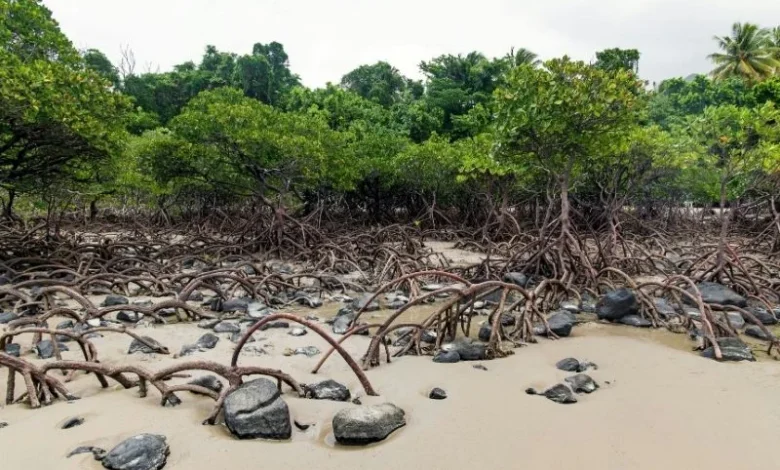
A dry, cracked fishpond in a delta that was never supposed to run out of water tells you almost everything about the state of the Sundarbans mangrove forest today. Sundarbans mangrove collapse, This isn’t a story about trees dying somewhere far away. It’s about families losing food and income, one pond and one rice field at a time, in the largest mangrove ecosystem on the planet.
What Is Actually Happening in the Sundarbans
The Sundarbans spans the delta shared by India and Bangladesh, where the Ganges, Brahmaputra and Meghna rivers meet the Bay of Bengal. It’s a UNESCO World Heritage Site and home to nearly seven million people who rely on it for fishing, farming and shelter.
The damage doesn’t arrive as one big disaster. It builds slowly, year after year:
- Embankments meant to hold back tidal rivers are failing faster than villagers can rebuild them, often patched with mud and bamboo just ahead of monsoon season.
- Saltwater is pushing into rice fields, turning land that once gave two harvests a year into land that struggles to give one.
- Freshwater fish ponds are turning brackish. Once that happens, they rarely bounce back.
- Sea levels near the Sundarbans are climbing faster than the global average, while upstream dams have cut the freshwater flow that used to keep salt levels in check.
Why This Should Worry the Rest of the World
This is the part most coverage skips over. The delta ecosystem collapse happening here isn’t unique to Bengal. The Mekong in Southeast Asia, the Nile in Egypt and the Niger in Nigeria are heading the same direction, just more slowly. The Sundarbans simply got there first.
Aid money usually flows toward embankment contracts and mangrove replanting. Both are useful. Neither one helps a family decide whether it’s worth still working a pond that barely produces anything anymore.
A Practical Checklist for Delta and Coastal Communities
- Check local salinity readings through district agriculture offices before each planting season.
- Spread income across more than one pond or plot where that’s possible.
- Join or form community savings groups, since many families here already pool savings informally just to get by.
- Look into national loss-and-damage schemes, including the UN Loss and Damage Fund now covering some climate-displaced delta populations.
- Ask local authorities for a proper embankment maintenance schedule instead of only emergency patchwork after storms.
Conclusion – Sundarbans mangrove collapse
The Sundarbans shows what happens when an ecosystem breaks down faster than the systems meant to protect it can keep up. For coastal communities everywhere, the lesson is straightforward: adapt before the crisis becomes visible, because by the time it is, the damage is already structural. Don’t wait for your delta to become the next Sundarbans.
Track the latest climate changes.
Is Your Seafood Becoming Riskier?
Find how El Niño affects ocean pollution.
Why Are Heatwaves Getting Worse?
Check out the link between monsoons and El Niño.
What Happens During Super El Niño?
See the major weather changes ahead.
Could Food Prices Rise Soon?
Uncover how climate affects grocery costs.
How Will Weather Patterns Change?
Get to know this summer’s biggest climate shifts.