Heatwave Alert: 10 Countries Where Extreme Heat Is Becoming a Year-Round Challenge

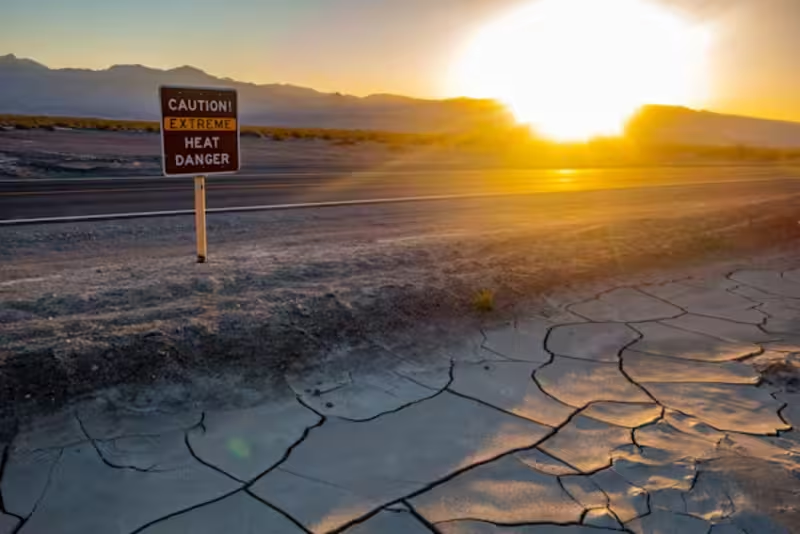
Heats that are beyond normal in the summer months have spread beyond their traditional limits as more countries and regions of the world have been experiencing prolonged periods of extreme heat going back to at least 2009. This increase in temperature has been driven by global warming, some changes in climate patterns, urban growth and the accelerating pace at which cities are being developed worldwide. The results of these changes have had a major impact on public health, agriculture, water supply and energy.
1. India
Large areas of India have been experiencing long periods without rain during the summer months. This has placed a strain on the availability of water and electricity during those months.
2. Pakistan
There are increasing instances of heat waves and an increase in average temperature that is impacting agriculture, health and urban infrastructure in a number of regions in Pakistan.
3. Saudi Arabia
In Saudi Arabia, it is not uncommon for the temperature to exceed 45ºC (113ºF) for long stretches of time during the summer months and, in some parts of the kingdom, for most of the year, thereby necessitating adequate cooling systems.
4. United Arab Emirates
The UAE has experienced long periods of excessively high temperatures and humidity, leading to changes in people’s working hours and routines.
5. Iraq
Southern Spain has been experiencing more frequent and intense heat waves since 2009, resulting in an increased need for properly functioning cooling systems.
6. Australia
The continual occurrence of extremely high temperatures during summer and the continued occurrence of wildfires have raised significant concerns within both the tourism industry as well as with many local community members.
7. Mexico
The Southwest and Southeast Regions of the United States are seeing prolonged heat wave occurrences, and record-breaking high temperature measurements are being recorded annually.
8. Spain
Beginning in 2009, southern Spain has been experiencing increases both numerically and qualitatively, thus necessitating improved cooling systems throughout the region.
9. Greece
For the tourism industry and for local communities, extreme summer temperatures and frequent occurrences of wildfires are now a normal part of life.
10. United States
States located in the Southwest and South continue to experience an increase in the length of time that they are able to sustain extremely hot temperatures, with numerous major cities experiencing record-breaking temperature readings each year.
Conclusion
Extreme heat is now a year-round challenge in many different countries around the world, affecting millions of people and increasing the demand for healthcare, power, and water resources. As the weather continues to heat up around the world, both governments and communities are developing new coping mechanisms in order to mitigate the effects of prolonged heat on vulnerable groups.
FAQs
What factors cause heat waves to last longer?
Heat waves are lasting longer because of global warming and the changing global weather patterns.
Which countries experience some of the hottest temperatures?
Some of the hottest countries in the world include Saudi Arabia, the UAE, India, Pakistan, and Iraq.
How does extreme heat impact people today?
Extreme heat results in increased electricity bills, health problems, decreased productivity, and more demand for water.
Are heat waves restricted to summer?
Yes, but some of these areas will have experienced above-average temperatures in each of the four seasons; spring, summer, fall, and winter.