China’s Great Green Wall Fights Desertification, But Its Carbon-Water Trade-Off Worries Scientists

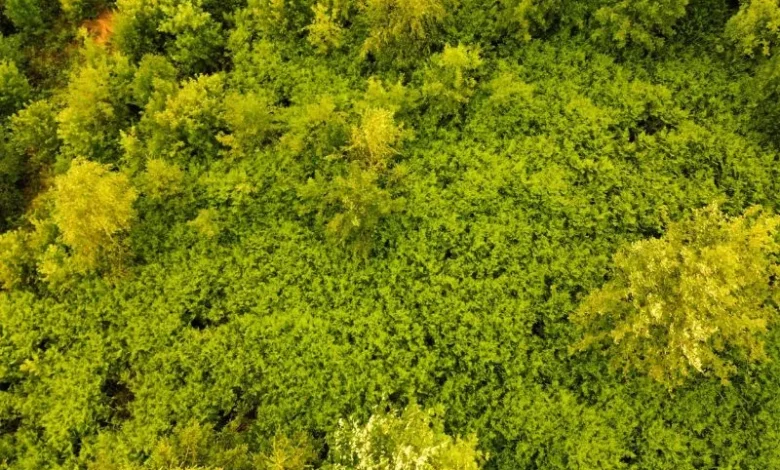
China has spent close to fifty years trying to hold back its deserts, and the scale of that effort is honestly hard to picture until you see the numbers. Late in 2024, engineers finally closed a desertification-fighting green belt stretching over 3,000 kilometres around the Taklamakan Desert. China Great Green Wall, On paper it looks like a straightforward success story. Talk to the scientists studying it, though, and a more complicated picture starts to show up underground.
What Was Actually Built Here
The project traces back to 1978, when China launched the Three-North Shelterbelt Program mainly to stop drifting sand from burying farmland, roads and rail lines. Over the decades that followed, workers put more than 66 billion trees into the ground across the country’s north. When the last section around the Taklamakan was finally planted, it completed an unbroken belt nearly 1,900 miles long, something people now casually call the “Great Green Wall.”
Why Scientists Are Suddenly Interested
A team from Caltech and NASA’s Jet Propulsion Laboratory went through two decades of satellite data, covering 2001 to 2020, and found something worth noting. The newly forested rim of the desert is now pulling in more carbon dioxide than the bare desert around it gives off. That is being described as the first solid evidence of a human-planted forest turning a truly extreme, dry landscape into a functioning carbon sink.
But There’s a Catch, and It’s a Big One
Trees do not grow in a desert on rainfall alone, no matter how well they’re planted. To keep this entire belt alive, engineers regularly redirect floodwater from rivers in the north straight into the forest zones. That water is not unlimited. Northern China already runs on a tight budget, supporting well over half the country’s population with roughly a fifth of its total water supply. Every bit that gets rerouted toward keeping trees alive is water that farms, factories and cities elsewhere are not getting.
Why This Story Isn’t Just About China
Plenty of countries facing their own dry, degraded land are looking at projects like this and wondering if they should copy it. A few things worth keeping in mind before they do:
- Carbon absorption numbers look impressive, but they rarely tell the whole story
- Water demand tends to show up years after planting, not immediately
- The original goal here, cutting down sandstorms, is still debated among researchers who study the region
- A forest that looks stable from a satellite photo can still be under serious strain on the ground
A Practical Checklist for Anyone Planning Something Similar
- Check groundwater and river supply limits before planting begins, not after
- Favour native, drought-tolerant species over fast-growing ones that need constant watering
- Track carbon capture and water use together, as one combined figure, not two separate reports
- Plan for what happens as the forest ages, since older, less diverse stands lose effectiveness over time
- Bring in independent researchers to monitor results honestly over many years, not just at launch
Conclusion – China Great Green Wall
What China has managed to do here is genuinely remarkable. Turning part of one of the driest places on Earth into land that absorbs more carbon than it releases is not a small thing, and it deserves real recognition. At the same time, this project is a reminder that nature rarely gives something for nothing. Any government or community thinking about trying the same thing should study the ambition, but plan even harder for the water bill that comes with it.
Track the latest climate changes.
Is Your Seafood Becoming Riskier?
Find how El Niño affects ocean pollution.
Why Are Heatwaves Getting Worse?
Check out the link between monsoons and El Niño.
What Happens During Super El Niño?
See the major weather changes ahead.
Could Food Prices Rise Soon?
Uncover how climate affects grocery costs.
How Will Weather Patterns Change?
Get to know this summer’s biggest climate shifts.