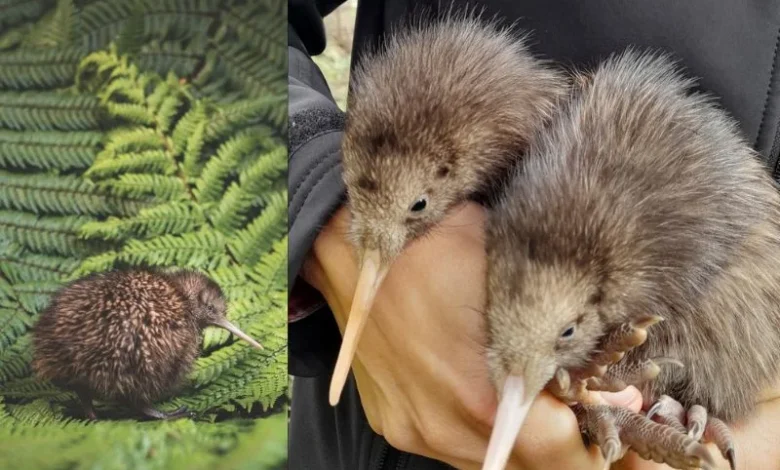
For over a century, no wild kiwi walked the hills surrounding Wellington, New Zealand’s capital. kiwi return to Wellington, That changed recently when more than 250 of the flightless, nocturnal birds were carried back into the Mākara and Ohariu hills, marking one of the most remarkable community-driven wildlife comebacks in the Pacific. This is not a story about a government agency quietly releasing birds from a lab. It is a story about ordinary residents, Māori iwi, tribal groups tied to their ancestral land, and farmers who spent nearly a decade rebuilding trust and clearing danger, one trap at a time.
Why Kiwi Disappeared From Wellington in the First Place
Kiwi are New Zealand’s national symbol, so recognisable that citizens themselves are nicknamed “Kiwis.” Yet the bird vanished from Wellington’s hills more than 100 years ago. Introduced predators, particularly stoats, rats, and roaming dogs, hunted kiwi eggs and chicks faster than the birds could reproduce. Kiwi cannot fly, and their ground nests leave them defenceless against animals that did not exist in New Zealand before European settlement. According to the Department of Conservation’s kiwi programme, fewer than 70,000 wild kiwi remain across the whole country today. Within a few generations, the birds simply disappeared from the Wellington region.
How the Project Brought Them Back
The turnaround began with a single trap hammered into the ground at Terawhiti Station near Mākara. Led by conservationist Paul Ward, the Capital Kiwi Project set an ambitious goal: clear a huge stretch of land of predators before even attempting to bring kiwi home. The effort involved installing around 4,600 self-resetting traps across roughly 24,000 hectares of farmland and scrub, an area larger than many national parks. It also meant working closely with local landowners and farmers to allow trap lines across private property, and running dog-owner education sessions, since even a friendly pet dog can kill a kiwi in seconds. None of this happened quickly. It took years of steady groundwork, including building a genuine relationship with local iwi, before a single bird was ever moved.
The Role of Local Guardianship in the Kiwi Comeback
This is where the project differs from typical conservation efforts. Local tribal groups were not consulted as an afterthought. Kiwi are taonga, a Māori word meaning a treasured or sacred possession, and their return carried deep cultural weight. Iwi representatives took part in formal pōwhiri, or welcome ceremonies, at each release, treating the transfer of birds as an act of guardianship passed from one community to another. This approach meant decisions moved at the pace of trust, not paperwork.
What Life Looks Like for Wellington’s Kiwi Today
The results have exceeded expectations. Chick survival in the population now sits at around 90 percent, a strong figure for a species once pushed toward extinction. Wild kiwi have even been heard calling at night in suburbs where residents had never encountered the bird outside a zoo enclosure. Wellington’s own wildlife sanctuary has recorded how this recovery fits into a wider pattern of native birds slowly reclaiming the capital’s green spaces.
What Other Communities Can Learn From Wellington
The Wellington model offers a clear lesson for other cities and towns hoping to bring back a lost species. Predator control has to come first, long before any animal is released. Relationships with indigenous groups and landowners need years to develop properly, not weeks. Residents, especially dog owners, need to be educated ahead of time rather than after an incident occurs. And the whole effort has to be treated as an ongoing partnership rather than a single event with a finish line.
Conclusion – kiwi return to Wellington
The return of the kiwi to Wellington shows that saving an endangered species does not always require a fenced sanctuary or a distant national park. It can happen in ordinary hills, on working farms, and in city suburbs, when neighbours, landowners, and local communities commit to the same goal for the long haul.
More stories on extreme weather.
Why Is Bangladesh Facing Flood Risks?
Find the latest climate insights.
What’s Driving India’s Weather Split?
Check out the extreme weather patterns.
Is Sonamarg Travel Safe Today?
Get to know the latest advisory.
How Severe Are China’s Floods?
Browse the latest emergency updates.
Why Is Northeast India Flooding?
Uncover the unusual jet stream effects.