El Niño Weather Pattern: Why Drought and Flash Floods Are Now Striking Together

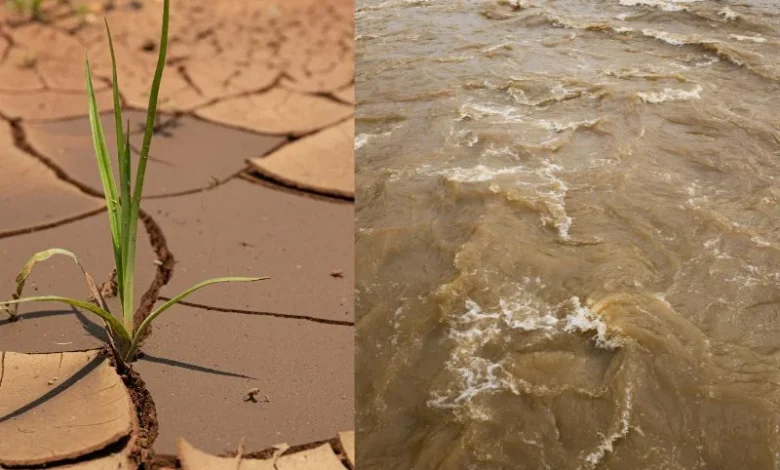
For decades, El Niño was mostly a dry weather signal, a warning of weak monsoons and falling crop production. El Niño weather pattern, And that picture is changing fast. The latest events demonstrate areas that have faced extreme rainfall deficit for months, only to be struck by sudden extreme downpours that inundate streets within hours. This double whammy of drought and flash floods is becoming the new normal in many parts of the world.
What’s going on the ground
A stark real-world example is western India where a district facing a 70 percent rainfall deficit received almost 177 mm of rainfall in a matter of eight hours in one region and over 1,000 mm in a day in another. Emergency teams rescued hundreds of people and moved more than 20,000 residents to safer ground. This is not the first time. Similar trends are occurring in the monsoon season in parts of Africa, Southeast Asia and Latin America, where El Niño years bring long dry spells followed by sudden, violent storms.
Dry Spells Turn Into Sudden Floods—Why?
The scientists looked at more than 100 years of rainfall data and found that El Niño years tend to produce less total seasonal rainfall but a higher probability of extreme rainfall on any given day in some areas. Basically, the sky keeps the rain away for weeks, and then lets it all out at once. Dry hard soil can not soak sudden heavy rain which makes flooding happen faster and makes it worse. Many researchers now directly link this shift with larger climate change trends, and not the natural El Nino cycle alone.
Safety and Prepared
“Communities in drought-impacted areas should not take for granted that the season will remain dry.
•Keep local weather alerts and mobile warning apps on, as national weather agencies now issue heavy rain warnings on short notice.
•Clear drains and low-lying areas even in dry spells before monsoon months.
•Farmers should not rely only on stored groundwater but also construct simple rainwater harvesting structures to store sudden heavy rains for later use.
•“Local governments should identify pockets that are prone to flooding early on especially around rivers and low areas and pre-position emergency response teams.
Conclusions – El Niño weather pattern
The link between drought and extreme rainfall suggests weather patterns are becoming more difficult to predict with old assumptions. Now farmers, city planners and families everywhere need to be prepared for both droughts and sudden floods, not just one or the other.
More stories on extreme weather.
Why Is Bangladesh Facing Flood Risks?
Find the latest climate insights.
What’s Driving India’s Weather Split?
Check out the extreme weather patterns.
Is Sonamarg Travel Safe Today?
Get to know the latest advisory.
How Severe Are China’s Floods?
Browse the latest emergency updates.
Why Is Northeast India Flooding?
Uncover the unusual jet stream effects.