
Why Are Satellites Becoming Smaller? And Why Does It Matter?
Small Satellites lower launch costs, expand global connectivity, improve weather tracking, and make space research more affordable for everyone worldwide.!

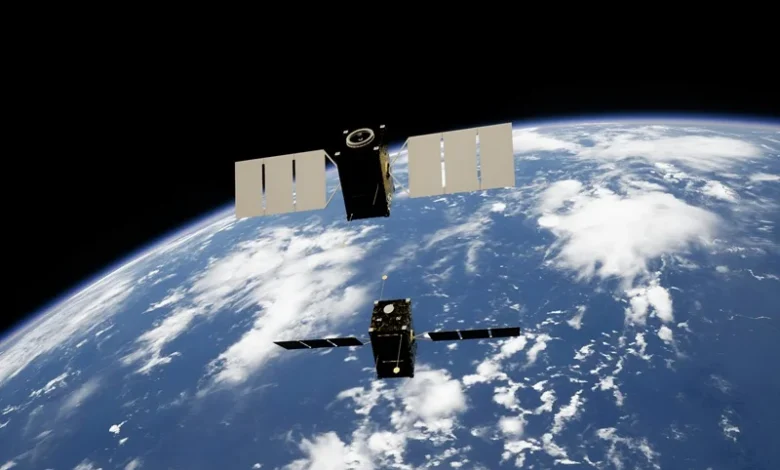
Satellites have traditionally been large, expensive machines that took years to build and launch. Today, advances in technology have made it possible to build small satellites, often called smallsats or CubeSats, that are much lighter, cheaper, and faster to produce. These compact satellites are changing the way countries, businesses, and researchers use space.
Why Are Satellites Becoming Smaller?
1. Lower Launch Costs
Smaller satellites weigh much less than traditional satellites, making them significantly cheaper to launch into orbit.
2. Faster Development
Many small satellites can be designed, built, and tested in months rather than years, allowing new technologies to reach space more quickly.
3. Improved Technology
Modern electronics are smaller and more powerful, allowing compact satellites to perform tasks that once required much larger systems.
4. Easier Constellations
Instead of relying on one large satellite, companies can launch hundreds of small satellites that work together to provide continuous global coverage.
5. More Affordable Access to Space
Universities, startups, and developing countries can now participate in space missions without the enormous budgets once required.
Why Does It Matter?
Better Internet Connectivity
Satellite constellations are expanding broadband access to remote and underserved areas around the world.
Improved Weather Forecasting
Small satellites collect real-time weather and climate data, helping improve forecasts and disaster preparedness.
Better Earth Observation
They monitor forests, oceans, agriculture, pollution, and natural disasters more frequently than traditional satellites.
Faster Disaster Response
Satellite images help emergency teams assess damage after floods, earthquakes, hurricanes, and wildfires.
Scientific Research
Small satellites support experiments in space, monitor Earth’s environment, and test new technologies at a lower cost.
Stay informed with the latest climate and Earth updates.
How Fast Are Glaciers Melting?
Check out what Greenland’s ice loss means for rising sea levels.
Are Climate Tipping Points Near?
Find out what scientists are tracking across the planet.
Why Is Antarctica Absorbing Less?
Uncover the mystery behind the latest carbon sponge findings.
Why Are Oceans Changing Colour?
See how seaweed blooms are transforming marine ecosystems.
Where Is Deforestation Slowing Down?
Browse the regions making progress through conservation efforts.
Conclusion
Smaller satellites are making space more accessible, affordable, and innovative. By lowering launch costs and enabling large satellite networks, they are improving communication, navigation, weather forecasting, and scientific research. As technology continues to advance, small satellites are expected to play an even greater role in the future of space exploration and global connectivity.
FAQs
What is a small satellite?
A small satellite is a lightweight spacecraft designed to perform specific tasks such as communication, Earth observation, or scientific research.
Why are small satellites cheaper?
They require fewer materials, are faster to build, and cost less to launch than traditional satellites.
What are CubeSats?
CubeSats are standardized miniature satellites commonly used for research, education, and technology testing.
Can small satellites provide internet services?
Yes. Many companies use large networks of small satellites to deliver broadband internet worldwide.