When Lake Winnebago Vanished for a Moment: Inside Wisconsin’s Rare Tornado-Triggered Meteotsunami

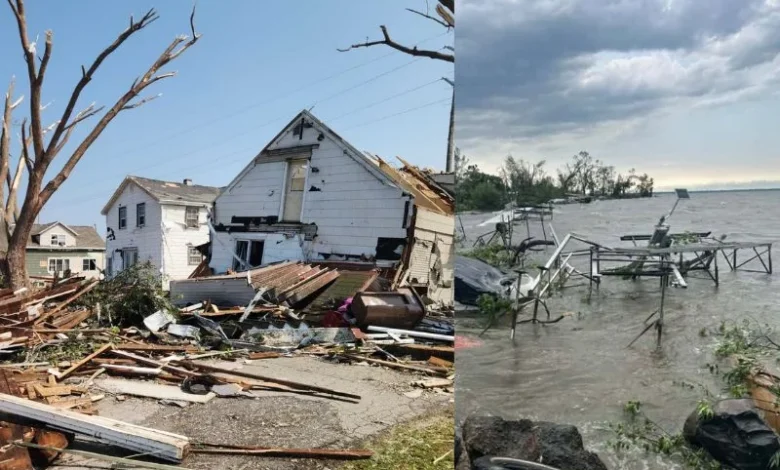
A tornado tore through the Fox Valley region of Wisconsin on July 27, 2026, and while the twister grabbed headlines, something stranger was happening at the water’s edge. Nearby Lake Winnebago dropped by roughly two feet, then surged back in a long, unnatural wave. Lake Winnebago meteotsunami, No earthquake caused it. This was a meteotsunami, a weather-driven wave event that looks like a tsunami but forms in an entirely different way.
What Exactly Happened at Lake Winnebago
A local storm chaser and meteorologist, watching from near Neenah, described the lake pulling back sharply as the tornado struck Menasha. Minutes later, at 12:29 pm, an oddly long wave rolled in from the northeast and spilled over the bank, forcing him to move his vehicle to safety. Debris, including roof shingles and even a plastic kiddie pool, was seen flying through the air nearby. The water displacement measured close to 60 centimeters, a notable but not destructive event by meteotsunami standards.
Why This Counts as a Meteotsunami, Not a Regular Tsunami
A meteotsunami is created when a sudden jump in air pressure and a burst of strong wind, both linked to a fast-moving storm system, push water ahead of the storm. Ordinary tsunamis come from earthquakes or landslides shifting the seafloor. A meteotsunami instead comes from the sky.
Why the Great Lakes Are a Hotspot
This was not a one-off freak accident. The Great Lakes region sees an estimated 80 or more meteotsunamis larger than one foot every single year, mostly in spring and early summer when severe storms cross the water. Most go unnoticed because they are small, but larger ones have caused real harm before, including a 1954 wave in Chicago that killed several people on a pier.
How Residents Can Stay Safe
For families living near the Great Lakes, small practical habits matter more than panic:
- Treat sudden water pullback near a shoreline as a warning sign, not a curiosity.
- Move away from piers, breakwaters, and beaches during or right after severe storms.
- Follow National Weather Service alerts for squall lines and severe thunderstorms.
- Avoid swimming for several hours after a storm passes, since rip currents can follow.
- Report unusual wave activity to local authorities so patterns can be tracked.
Conclusion – Lake Winnebago meteotsunami
Wisconsin’s meteotsunami is a reminder that dramatic water events do not always need an earthquake, just the right combination of wind and pressure moving fast across a lake. As Great Lakes storms grow more intense with shifting weather patterns, staying alert to sudden shoreline changes could genuinely save a life.
Stay Ahead Of Global Trends
Why Is Davos So Important?
Dive into the key discussions shaping global politics and the economy.
Can Youth Change Climate Future?
Explore how young leaders are driving meaningful climate action worldwide.
What’s Behind Recent Peace Talks?
Uncover the facts surrounding disputed and verified peace agreements.
Are You Recycling Electronics Correctly?
Check out simple steps to dispose of old devices safely.
Do Weather Alert Colors Matter?
Get to know what yellow, orange and red warnings really mean.