

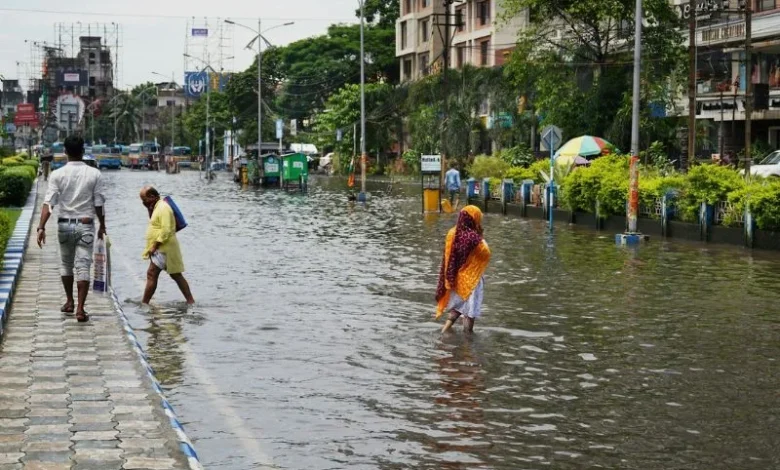
The city of Kolkata is under constant threat of flooding because it is located at an extremely low elevation, has flat ground and is near the Hooghly River. Most of the city lies within just a few meters of sea level so even moderate amounts of rain will create large puddles of water.
The risk for flooding is even greater during the monsoon season when heavy rain coincides with high tide which slows down drainage ability. kolkata flood risk map In many cases, water cannot flow out of the area quickly enough leading to backflow and flooding of streets in many neighborhoods.
High Flood-Risk Neighbourhoods
Some neighborhoods in Kolkata are routinely susceptible to very large amounts of water because of their topography and limitations in their drainage systems. These neighborhoods include:
Behala – One of the largest areas that floods due to accumulation of rainwater.
Tollygunge – The area has a very low elevation combined with drainage bottlenecks creates a constant flood risk.
Salt Lake (some parts) – This area has relatively low-risk assessments due to being built up and may not experience flooding even during a heavy rainfall.
Ultadanga – Flooding occurs rapidly and creates a hazard in the area.
Garden Reach – Located immediately next to the river systems; therefore, vulnerability to flooding.
Flooding occurs in these neighborhoods leading to roads getting submerged, disruption to traffic flow, and property damage from heavy rainfall.
Moderate to Lower Risk Areas
Kolkata contains some areas that are moderately risked but not immune to flooding:
- Alipore has a better system of drainage due to a slightly higher elevation.
- Ballygunge has a planned infrastructure that helps to lessen the frequency that the area floods.
- New Town has a modern urban drainage system and proves to be a planner’s dream.
These areas are served by an improved network of drainage and a higher elevation, but these areas still experience the effects of heavy rainfall resulting in temporary waterlogging.
What Drives Flood Risk in Kolkata?
The flood risk in Kolkata is dependent on natural factors and urban design factors:
- Low elevation combined with flat surface topography, which is very flat.
- High tide blocks the drainage outfall.
- Most of the drainage is old and/or poorly constructed.
- Wetlands and canals both have been encroached on by new development.
- Rapidly urbanising results in diminished land drainage capacity and surface grading fixes.
A very small elevation change or minor increase in a drainage system’s ability to store water significantly extends the areas where the surface drainage will accumulate.
Environment Insights You Should Read
Why Indoor Air Quality Important?
Explore how plants improve air.
Why Tropical Plants Bloom Changing?
Discover impact on farming cycles.
How Warming Reshapes Coastal Living?
Check risks for island communities.
Final Words
Flood risk in Kolkata is not uniform—it varies sharply by neighbourhood.
Understanding these patterns is essential for residents, planners, and investors. As rainfall becomes more intense, managing drainage and protecting natural buffers will be key to reducing future flood risk.
FAQs
1. Which area is the most frequently flooded in Kolkata?
The areas of Behala and Ultadanga are two of the most flood-prone areas of Kolkata.
2. Do the planned drainage systems prevent flooding in Salt Lake?
Yes, there are still some areas of Salt Lake that experience the effects of waterlogging due to drainage being a limiting factor.
3. How does the high tide influence flooding?
High tide makes it impossible to remove rainwater from the surface to the river. Rainwater backs up over the area that’s needed to dump.
4. Is it possible to lessen flooding in Kolkata?
Yes, through providing more efficient drainage systems, protecting wetlands, and using better urban planning.