
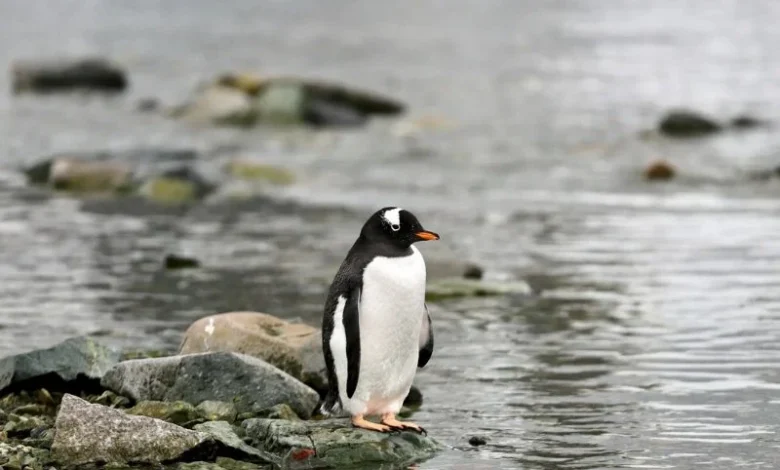
For more than one hundred years, nobody had named a brand new penguin species. That changed recently when a team studying gentoo penguins found something nobody expected. new penguin species, What everyone assumed was one widespread bird is actually four separate species. For anyone who follows wildlife news anywhere in the world, this is a rare and genuinely exciting moment in science.
The Discovery That Changed Penguin History
Scientists had argued for decades about how many types of gentoo penguins truly existed. These birds are spread across a vast stretch of the Southern Hemisphere, from the Falkland Islands to Antarctica and several isolated sub-Antarctic islands. For years, nobody could agree whether the small physical differences seen between groups actually meant anything in scientific terms.
A group of researchers from the United States, Chile, and Brazil finally decided to settle the debate using full genome sequencing. They examined genetic material from 64 individual birds across ten breeding colonies, covering almost the entire range where gentoo penguins are found. What they discovered was unmistakable. Instead of one species, there are four.
A New Species From One of the Remotest Places on Earth
One of these four groups turned out to be completely unknown to science. It was found living on the Kerguelen Islands, a remote cluster of islands in the southern Indian Ocean, located thousands of kilometres away from any permanently inhabited land. Because so few people ever travel there, the penguins on these islands had never been studied closely enough to notice how different they really were.
Researchers believe the four groups drifted apart genetically over roughly the last 300,000 to 500,000 years. Separated by enormous ocean distances, each population slowly adjusted to its own surroundings until it became its own distinct species.
Why This Finding Is Important Outside of Science
This is not just an interesting fact for biology books. It carries real weight for wildlife protection.
Treating every gentoo penguin as part of one large, stable population may have hidden problems affecting smaller, more vulnerable groups. Some of these newly recognised species live in areas already affected by rising ocean temperatures, and researchers caution that continued warming could shrink suitable habitat for several of these island populations within just a few decades.
By identifying each group as its own species, conservation organisations can now track population health far more precisely and react sooner if any group begins to decline.
How the World Is Responding
Word of the discovery travelled quickly through scientific circles, from universities in California to research institutes across South America. Many experts regard it as evidence that even a creature as well-known as the penguin can still amaze us and that careful genetic work can expose truths that simple observation could never discover.
Conclusion – new penguin species
The discovery of this new penguin species reminds us that there can still be secrets to be uncovered by modern science, even in animals we thought we knew everything about. It also underlines how urgent conservation planning has become for wildlife living in fragile, fast changing environments. The real takeaway for readers everywhere is simple: protecting biodiversity begins with knowing exactly what still needs protecting.
Wildlife stories worth watching closely.
Which Countries Face Wildlife Loss?
Check out global hotspots where endangered species need urgent protection.
What Makes This Monkey So Rare?
Find out about the newly discovered orange-lipped monkey in Congo.
Why Are Andaman Species Disappearing?
Uncover why these unique species need immediate conservation efforts.
Can AI Help Save Wildlife?
See how AI is transforming endangered wildlife monitoring.
Which Species Are Near Extinction?
Look into wildlife facing the highest risks of disappearing.