
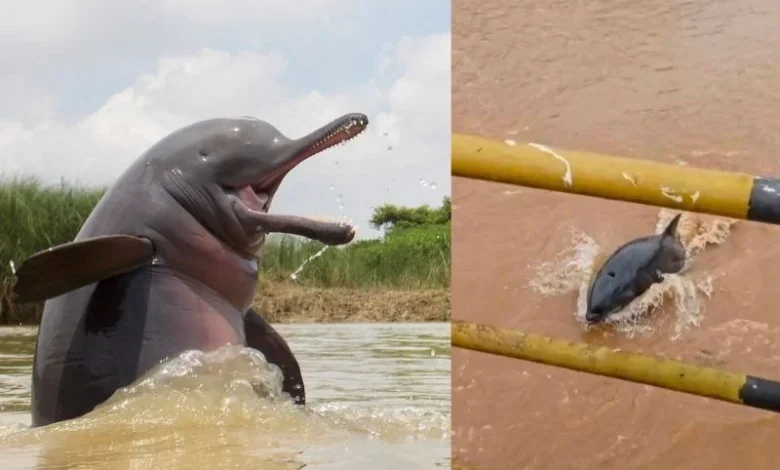
Nature doesn’t always play by the rules we expect. Along the southern edge of Dhaka, Bangladesh’s crowded capital, runs the Buriganga River, a waterway so filthy that scientists say fish simply cannot live in it anymore. And yet, a recent year-long survey found that endangered Ganges river dolphins are not only hanging on here, they’re having calves. It’s a small but striking sign of life inside one of the most damaged rivers in the world.
A River Too Polluted for Its Own Fish
The Buriganga runs just 29 kilometres, but it carries the weight of a megacity. For years it has taken in waste from tanneries, textile dyeing units, battery factories, and raw sewage flowing straight from Dhaka’s streets. Water tests have found toxic metals like lead, chromium, and cadmium at levels far beyond what the World Health Organization considers safe. In the dry season, oxygen in the river drops close to zero, a point at which most aquatic life simply cannot survive.
How Are the Dolphins Still Alive?
Between September 2023 and August 2024, researchers surveyed a 27-kilometre stretch of the river and spotted dolphins in ten out of twelve months. Groups averaged around four animals, and calves made up nearly 16 percent of all sightings, a sign that breeding is still happening even under such harsh conditions.
The answer to how seems to lie in an odd twist of fate. While native fish have all but vanished, an invasive species called the suckermouth catfish, originally brought over from South America, has taken over the river because it can handle pollution that native fish cannot. Scientists now believe the dolphins have simply switched their diet, hunting this tough invasive fish because there’s little else left in the water.
Why This Story Matters Beyond Bangladesh
This isn’t only a local story. It touches a question conservationists everywhere are asking: how much damage can a species absorb before it finally gives out? A countrywide survey by Bangladesh’s Forest Department and the Wildlife Conservation Society counted more than 2,300 Ganges river dolphins across the nation’s rivers, a number that shows the species is still holding on, even if its grip is shaky.
What Needs to Change
Scientists studying the Buriganga are careful to point out that surviving pollution isn’t the same as being safe from it. A few things stand out from their work:
- Factories need to treat waste before it reaches the river, not dump it raw
- Harmful fishing methods that injure or kill dolphins need real enforcement
- Dhaka’s sewage treatment systems need serious expansion
- Regular water testing should continue alongside dolphin monitoring
Conclusion
The dolphins of the Buriganga show us that life can be stubborn, but stubbornness has its limits. Their survival should worry us as much as it inspires us, because an animal that adapts to poison today can still disappear tomorrow if the pollution keeps growing. Cleaning up rivers like this one isn’t just about saving a species, it’s about saving water that millions of people rely on every single day.
Stay Ahead Of Global Trends
Why Is Davos So Important?
Dive into the key discussions shaping global politics and the economy.
Can Youth Change Climate Future?
Explore how young leaders are driving meaningful climate action worldwide.
What’s Behind Recent Peace Talks?
Uncover the facts surrounding disputed and verified peace agreements.
Are You Recycling Electronics Correctly?
Check out simple steps to dispose of old devices safely.
Do Weather Alert Colors Matter?
Get to know what yellow, orange and red warnings really mean.