New Monkey Species With Orange Lips Discovered in DR Congo’s Lomami National Park

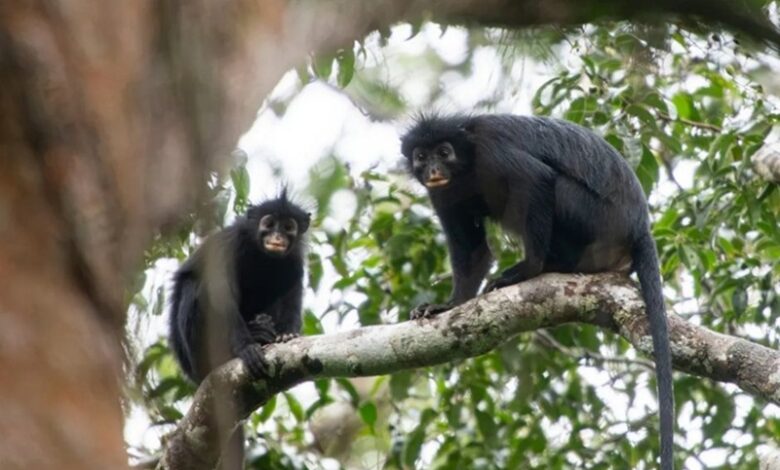
Since the late 1990s, a strange black-faced, bright orange-pink-lipped monkey has been darting through the trees of the Democratic Republic of Congo—rarely seen, even by the locals who live nearby. It is proved to be a completely new monkey species after years of painstaking fieldwork. Scientists around the world are calling it a rare and hopeful moment for conservation.
Discovery of the Orange-Lipped Monkey
The story starts in 2008, when conservationists working in Lomami National Park snapped one blurry photo of some unidentifiable creature. A full investigation by an international team led by researcher Junior Amboko was launched following a second sighting 10 years later. Between 2018 and 2022, the team recorded 114 sightings in some 1,700 square kilometers of forest between the rivers Lomami and Lualaba.
Discover the new generation
It had been officially named Colobus congoensis, but the locals had another name for it. The monkeys are known as likweli by hunters of the Balanga ethnic group and as “kasaba nkoni” (branch shaker) by some Mituku groups, named for the way colobus monkeys jump from tree to tree. The animal is smaller than other related colobus species and weighs about 6.8 kg. It is easily identified by its glossy black coat and spiky hair and has a deep, roaring call unlike any other colobus monkey.
The global significance of this discovery
It is just the fifth new African monkey species to be discovered in 75 years, a rare event for science. It also demonstrates how little the rest of the world still knows about the Congo Basin, one of the planet’s most important rainforests for climate stability and biodiversity. The researchers spoke to people in 52 nearby villages and discovered only eight had actually seen the monkey, which speaks to how elusive it is.
Conservation Status of the Newly Described Species
Because of its very restricted range, scientists are recommending that Colobus congoensis be classified as “endangered.” Main risks are:
•Hunting pressure in and around Lomami National Park.
•Habitat loss from logging and land clearing.
•Restricted to one river basin, small natural population.
•There is very little baseline data, as the species has only recently been described.
Explore More Clean Energy Stories
Why Oppose Deep-Sea Mining Now?
Discover why global protests are growing.
Is Clean Energy Winning Today?
Check out how renewables are overtaking fossil fuels.
Why Is COP30 Facing Backlash?
Find the latest clean energy debate.
How Does Green Fuel Help?
Look into sustainable aviation fuel benefits.
Why Is Solar Now Cheaper?
See how solar beats fossil fuel costs.
Readers can do many things to help conserve
•For news updates follow credible conservation organizations like the Lukuru Wildlife Research Foundation.
•Fundraising support groups for the protection of the rainforests of the Congo Basin.
•Don’t buy bushmeat or products made of endangered primates.
•Share stories from reliable news sources to increase public awareness of new species discoveries.
Conclusion
This orange-lipped monkey is a reminder that even in 2026, the natural world still holds secrets, many of them dying before they are ever documented. It’s not just about protecting one species; it’s about protecting an entire ecosystem the planet depends on. “Protecting places like Lomami National Park. If a rainforest is worth visiting, it is worth saving.