Rare Assam Plant Rungia Mastersii Found Again After 180 Years, Sparking New Hope for Endemic Species Conservation

For close to two centuries, botanists assumed one small Assam plant had simply vanished. Rare Assam plant, Then, during a routine field trip, a doctoral student walked straight into a piece of living history. Here’s the full story behind the rediscovery of this endemic plant species, and why it should matter to anyone who cares about the natural world, not just people in Assam.
A Discovery 180 Years in the Making
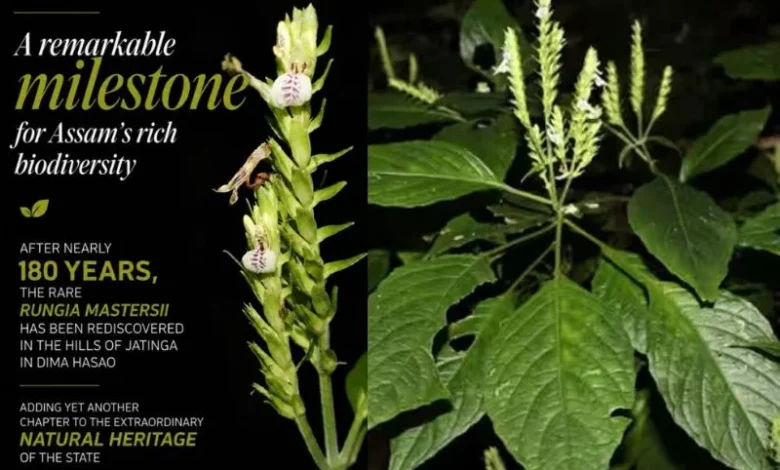
Back in 1845, a British botanist named J.W. Masters spotted a small flowering shrub near Assam’s Sundari river. He documented it, and the plant was later named Rungia mastersii after him. Then it disappeared. Not one person recorded seeing it again, anywhere, for 180 years.
That streak broke when Kangkan Kumar Das, a doctoral researcher at Assam University, Silchar, was out studying the Acanthaceae plant family across the region. While trekking through the Jatinga Hills in Dima Hasao district, he noticed an unusual shrub growing along a damp, rocky streambank. He brought the find to his professor, Debjyoti Bhattacharyya, and the two eventually got confirmation from a botanist in China. The plant everyone had given up on was still out there.
What Makes This Plant So Rare
The shrub grows anywhere from 60 to 110 centimetres tall, favouring moist, shaded forest at elevations between 900 and 1,250 metres. Its flowers are pale, almost whitish, streaked faintly with purple. Before this rediscovery, the only physical proof it had ever existed was a single dried specimen sitting in a herbarium in Howrah.
Why the Find Raises Concern, Not Just Celebration
Here’s the catch. Researchers counted only 40 to 42 living plants, and every one of them grows in the exact same small patch of forest.
A few things make this especially worrying:
- The site has no official protection as a reserve forest
- The area is known to be landslide prone
- One fire or one landslide could wipe out the entire species overnight
- Reaching the location means a five hour trek on foot, no roads in
A Global Lesson from a Local Forest
This isn’t just a story about one plant on one hillside in India. Small, isolated populations like this exist all over the planet, and they’re all vulnerable to the same combination of habitat loss and shrinking numbers. It’s a fair reminder that even regions considered “well studied” can still be hiding species nobody has properly looked for in decades.
The research team is now pushing for wider surveys of the area, closer tracking of the surviving plants, and possibly growing the species in other safe spots so its survival doesn’t hinge on one fragile patch of hillside.
Conclusion – Rare Assam plant
Finding Rungia mastersii again after 180 years is a rare piece of good news for conservation. But with fewer than 45 plants left, all crowded into one unprotected corner of forest, the celebration comes with a warning attached. What happens next in Jatinga Hills could decide whether this plant gets another two centuries, or none at all.
More stories on extreme weather.
Why Is Bangladesh Facing Flood Risks?
Find the latest climate insights.
What’s Driving India’s Weather Split?
Check out the extreme weather patterns.
Is Sonamarg Travel Safe Today?
Get to know the latest advisory.
How Severe Are China’s Floods?
Browse the latest emergency updates.
Why Is Northeast India Flooding?
Uncover the unusual jet stream effects.