Denmark’s Forest Experiment: Why Planted Trees Store Carbon Faster But Natural Forests Win On Biodiversity


For more than 20 years, Denmark has quietly run one of Europe’s most useful land experiments. Planted trees carbon storage, Scientists compared land that was formerly farmland and left to regrow naturally to land where trees were planted intentionally. Results published from long-term Danish research show a true trade-off between speed and richness. This study is important well beyond the borders of Denmark if you care about carbon storage or natural forests.
What the Danish Study Really Found
The researchers looked at four types of land use—mature woodland, active tree plantations and areas left to regenerate on their own. After two decades:
•During the study period, plantation forests grew faster and stored more carbon in tree trunks and branches.
•Of course the colonized land had fewer trees overall but much more variety of native species.
•There were no significant differences in top-layer soil carbon between land types, indicating that aboveground tree growth had not yet been reflected in underground carbon stocks.
Why Plantations Sequester Carbon Faster
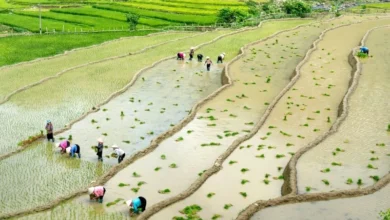
The trees get a head start by planting nursery-grown saplings at controlled spacings. Dense, uniform tree plantations accumulate biomass more quickly, which is why the approach is attractive for short-term climate targets and carbon credit schemes used by governments and businesses around the world.
Why Natural Regeneration Builds Better Ecosystems
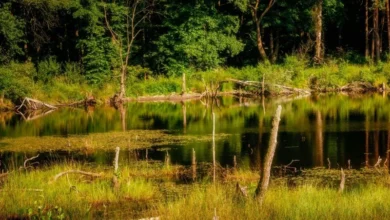
Let it go and recruit whatever seeds come in naturally—birds, wind, and woodland nearby. This creates patchily mixed, uneven species stands, which is good for insects, birds and soil life. This biodiversity, many scientists say, makes forests more resilient to drought, disease and pests in the long run.
What This Means For Readers Around The Globe
The lesson is global: if you live near reforestation projects in India, Kenya, Brazil, or the United States, not all “tree planting” has the same outcome.
Quick checklist before supporting or joining a tree planting scheme:
•Ask if the project will be a single-species plantation or mixed native species.
•Determine whether the goal is fast carbon credits or long-term biodiversity.
•Seek support from local government or recognised environmental organisations.
•Prefer projects that release independent monitoring data.
•Support the natural regeneration of already degraded areas.
Conclusion – planted trees carbon storage
The Danish results do not imply that plantations are bad or that natural regrowth is always better. They show that climate policy needs both approaches, applied to the right goal, be that goal speed or ecological richness.
More stories on extreme weather.
Why Is Bangladesh Facing Flood Risks?
Find the latest climate insights.
What’s Driving India’s Weather Split?
Check out the extreme weather patterns.
Is Sonamarg Travel Safe Today?
Get to know the latest advisory.
How Severe Are China’s Floods?
Browse the latest emergency updates.
Why Is Northeast India Flooding?
Uncover the unusual jet stream effects.