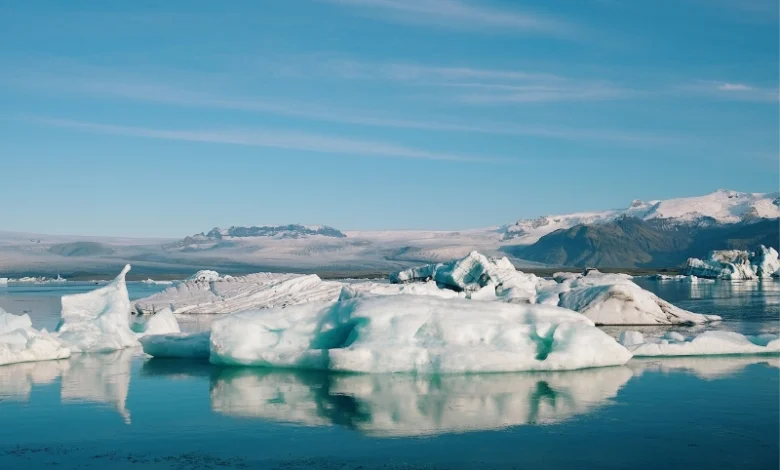
Thwaites Glacier, which is approximately the same size as Great Britain, is famously referred to as the “Doomsday Glacier”. In the event that it collapses completely, the world’s oceans will rise by about 65 centimeters.
How Quickly Is It Changing?
The rate of ice permanently lost from Thwaites glacier and neighboring glaciers has nearly doubled from the 1990s to the 2010s, therefore currently, the region accounts to about 8% of the global sea-level rise. Thwaites glacier last eastern ice shelf is projected to disintegrate in the next ten years.
Is There a Risk of Collapse Soon?
According to the International Thwaites Glacier Collaboration, it won’t occur in the next few decades, however, the glacier will continue disintegrating throughout the XXI and the XXII century. A research conducted in 2021 states that there is likely to be no sudden collapse of ice cliffs, as it was expected previously.
What New Is There?
An investigation done in October 2026 stated that tides trigger the flow of warm seawater kilometers under the glaciers, and therefore by 2100 the glacier is probably going to add approximately 30 centimeters into ocean levels, which is double the previous estimations, thus increasing the risks for cities that are going to be flooded. That raises risks of sinking cities and Antarctic ice research.
Read more Environmental Changes
Are Himalayan glaciers melting?
See what it means for South Asia’s rivers.
Are coral reefs on the brink?
See what mass bleaching means for the ocean.
Could we dim the sun to cool the planet?
Weigh the risks of solar geoengineering.
Why are cyclones strengthening faster?
Read about rapid intensification and why it matters.
Is extreme heat a health crisis?
Learn why heat is becoming a public health threat worldwide.