The Spider That Pretends to Be a Parasite — And Why It Works
Discover how the spider that mimics a fungus fools predators and catches prey in Ecuador's Amazon, revealing a rare survival strategy in nature today.

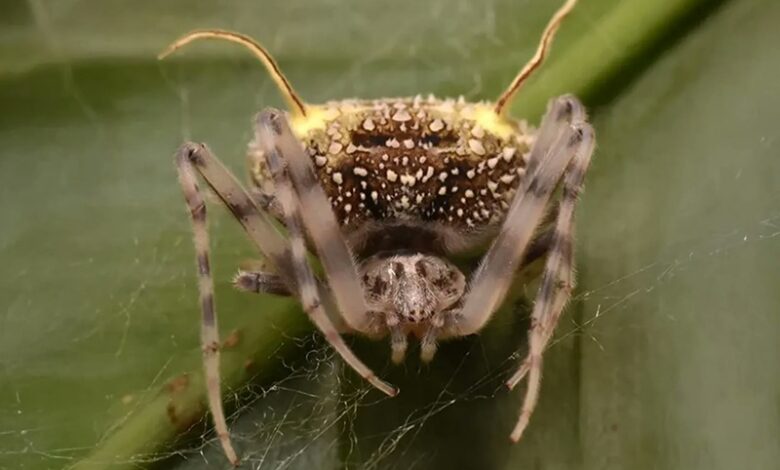
Deep in the Amazon rainforest, scientists have discovered a spider that does something almost never seen in nature. It would rather seem like trouble than run away from it. This spider mimics the look of a deadly fungus, and the trick works remarkably well.
Meet the Spider That Mimics a Fungus
Taczanowskia waska, the species’ name, was found in the Llanganates-Sangay Corridor of Ecuador, one of the most biologically rich places on the planet. Researchers first saw it in a night survey and at first sight thought it was a mushroom. The point was actually the mistake.
This spider looks a lot like Gibellula, a parasitic fungus that grows on and eventually kills spiders. It is covered with pale, lumpy skin and has thin protuberances coming out of its body, much like the fungus it mimics. It even mimics the fungus by remaining perfectly still on the underside of leaves where Gibellula is usually found.
Why It Makes Sense to Act Like a Parasite
- This might sound like a crazy survival plan, but it makes total sense when you know how predators think.
- Most animals will avoid anything that looks sick, infected or diseased.
- You don’t see a fungus-covered creature as food; you see it as a warning sign.
- By imitating this appearance the spider becomes almost invisible to hungry predators.
- Another layer of protection is remaining still and blending in with the undersides of leaves.
- The disguise might also help the spider to approach its own prey unnoticed.
It’s the first confirmed case of a spider imitating a parasitic fungus that infects its own species, scientists say. This is a wholly different sort of mimicry from the more familiar cases like harmless insects mimicking the colours of wasps or spiders imitating ants to stay safe.
A tiny spider with a big lesson
It’s a discovery that makes you realise how much of the natural world is still a mystery. Spiders of this genus are seldom observed and many fundamental facts about their lives are unknown. The discovery also started, in part, with an observation shared on a citizen science app, showing that regular nature lovers can add to actual scientific discoveries.
Quick Facts
- Lugar: Selva Amazónica, Ecuador
- Trick used: Looks and acts like a spider killing fungus
- Purpose: to escape predators, to catch prey
- Why this matters: First known example of this type of mimicry in spiders
- Bigger picture: Reveals how much biodiversity is still to be discovered
Explore More: Discover the Ideas and Innovations Shaping Tomorrow
Which Technologies Will Transform Industries Next?
Discover the breakthrough technologies that could reshape traditional industries and the future of work.
Why Are Wetlands So Important Globally?
Explore the world’s most important wetlands and learn why they are vital for nature and humanity.
Can Innovation Improve Renewable Energy Reliability?
Check out the latest innovations making renewable energy cleaner, smarter, and more dependable.
Which Countries Lead Green Living?
Discover the 2026 ranking of the world’s greenest countries and their sustainability achievements.
How Are Cities Fighting Climate Change?
Explore the cities investing in climate-resilient infrastructure to prepare for a changing future.
Conclusions
Nature does not always survive by strength, but by clever disguise and this spider shows us that pretending to be dangerous can be just as dangerous. So next time you walk past a weird looking mushroom in a damp forest, look twice, because it may just be looking back at you.