

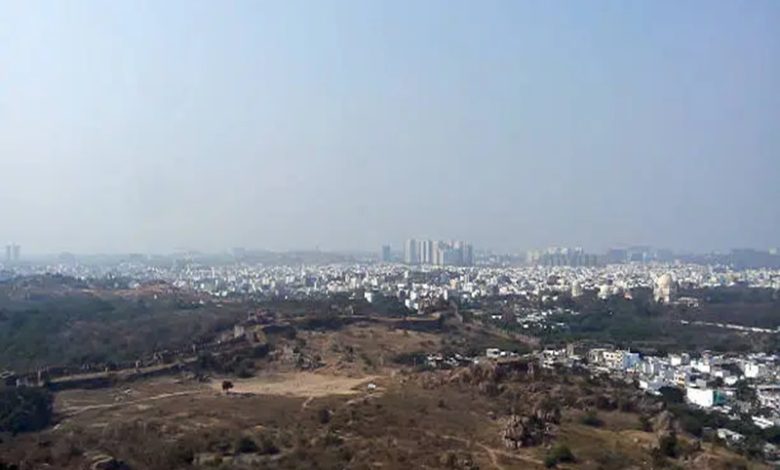
Cities have urban “heat islands” – an area within the city that has an overall temperature that is much hotter than the surrounding areas. One cause of this phenomenon occurs in Hyderabad due to the heat-absorbing nature of concrete buildings, asphalt roadways, and the density of urban infrastructure during the day, then being slowly released at night.
Heat is trapped when airflow is restricted, which raises the temperature of the local environment 2 – 3 degrees higher than adjacent neighborhoods with more vegetation / green space. As a result, some neighborhoods feel hotter than others, especially during the peak heat of the summer.
Hotter Zones Across the City
Some parts of Hyderabad will have a consistently higher temperature than other parts of the city due to high density, high traffic volume, and high rates of construction activity in those areas.
The higher degree of the urban heat island effect has been observed in Madhapur, Kukatpally, and Ameerpet (IT hubs), where there is a high density of commercial activity with minimal open space.
In addition, centrally located areas such as Secunderabad (high traffic congestion areas) and industrial areas have also been observed to experience high heat, due to (a) lower levels of vegetation compared to other areas and (b) continued human activity.
Why These Areas Are Hotter
Temperature variation in Hyderabad can be attributed to multiple factors. High-rise buildings and densely placed buildings restrict airflow, trapping warmth in the air. Paved roads and sidewalks retain solar heat and then re-radiate it back to the environment. The dust and construction from new buildings increase heat absorption. In addition, there are no trees or water features in many areas, further eliminating natural methods of cooling. Conversely, Lake areas, land with open spaces, and grassy areas such as the outer ring road, remain relatively cooler than the city.
Stay Ahead of Hyderabad’s Climate Challenges
1. Why Do Hyderabad Areas Flood Easily?
Explore the key areas facing waterlogging issues during heavy rains in Hyderabad.
2. Is Traffic Worsening Hyderabad’s Air Quality?
Discover how rising traffic congestion is impacting Hyderabad’s air pollution levels.
3. Which Hyderabad Areas Face Extreme Heat Risk?
Check the most heat-prone zones and survival tips during Hyderabad’s harsh summers.
4. Is Hyderabad Running Out of Summer Water?
Explore how rapid urban growth is affecting the city’s water balance in summer.
5. Which Indian Cities Face Severe Heatwaves?
Discover the cities in India most vulnerable to extreme and dangerous heatwaves.
Final Words
Urban heat islands are a direct result of the city’s expanding construction and urban form. Mitigating these areas of heat/shade will be vital as global temperatures increase. City officials must increase the amount of green spaces and parks, redesign cities to increase airflow, and limit the amount of heat-retaining materials used in the construction of the city to make it more livable and sustainable over time.
FAQs
1. What is an urban heat Island?
Urban heat islands are parts of cities that are warmer than their surrounding areas because of human development activity and buildings/infrastructure.
2. What are the hottest areas in Hyderabad?
The hottest areas in Hyderabad typically include Madhapur, Kukutpally, Ameerpet, and the CCB areas.
3. How do the buildings contribute to heat?
They help trap heat and restrict airflow, eliminating cooling from local natural resources.
4. Can heat island effects be reduced?
Yes, through more greenery, better urban planning, and reflective building materials.