
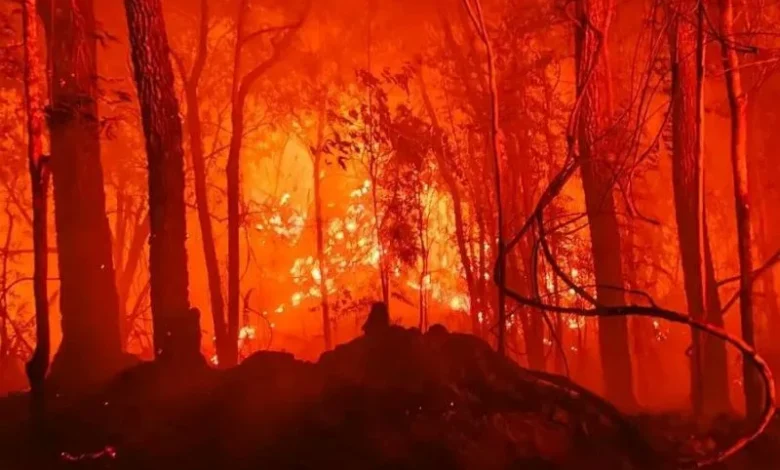
For weeks every autumn, smoke from farm fires in northern India cloaks cities, schools and highways. Now a new scientific study has provided concrete figures for a problem long suspected by residents: crop-residue burning is a major source of black carbon, the fine, sooty particle blamed for dirty air and a warming planet.
What did the Study Find
During the October to November harvest window when farmers regularly burn leftover rice stalks to quickly clear fields, researchers from IIT Delhi set up monitoring equipment in a farming village in Punjab. This burning averaged nearly half of all black carbon detected at the site. During peak burning hours, that share was greater than 90 percent. This soot was then carried by winds across the larger Indo-Gangetic Plain, worsening air quality further in downwind cities like Delhi.
How Black Carbon Differs
Unlike the normal particles in smoke that reflect sunlight, black carbon absorbs sunlight and warms the air around it. When it lands on snow or ice it darkens the surface and accelerates melting. It also lodges deep in human lungs and has been linked by World Health Organization research to heart and lung diseases with prolonged exposure. But today, despite these risks, no country has a specific air-quality limit for black carbon, as it does for regular particulate matter.
Not a Local Problem, a Global Farming Problem’
Stubble burning is not only restricted to South Asia. In parts of Southeast Asia, Africa and Latin America, farmers use similar quick-clearing methods in the off-season between harvests. The results provide a valuable case study for any region contemplating enforcement bans versus support for alternatives such as straw balers, mulching or biochar production.
Practical Recommendations for Policymakers and Communities
•Affordable equipment to help farmers manage residue without burning
•Increase monitoring and enforcement during the peak harvest weeks
•Monitor black carbon separately from general smog readings
•Investing in local composting or biofuel programs as a substitute to burning
•Use mobile alerts to raise public awareness of pollution spikes from burning
Conclusion
The study is a reminder that seasonal farm fires are not just a local problem, but a measurable driver of climate change and a source of public health harm that extends far beyond the fields where they start. Just banning paper is not the answer, we need farmer friendly alternatives. Cleaner harvests today. Clearer skies for all tomorrow.
Track the latest climate changes.
Is Your Seafood Becoming Riskier?
Find how El Niño affects ocean pollution.
Why Are Heatwaves Getting Worse?
Check out the link between monsoons and El Niño.
What Happens During Super El Niño?
See the major weather changes ahead.
Could Food Prices Rise Soon?
Uncover how climate affects grocery costs.
How Will Weather Patterns Change?
Get to know this summer’s biggest climate shifts.