Why Congo Basin Villagers Don’t Trust That Climate Tower, And What It Teaches Us

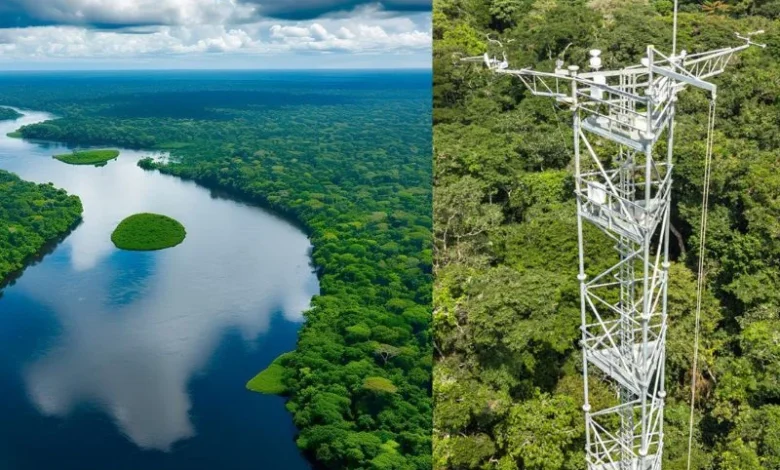
A tall metal tower stands quietly in the Yangambi Biosphere Reserve in the Democratic Republic of Congo. Congo Basin climate projects, Nearby villagers believe it does something strange: pulls oxygen from their rainforest and ships it to Europe for profit. This isn’t a joke someone made up for fun. It’s a real story that has shaped how local people respond to climate conservation work, and honestly, it says more about broken trust than about bad science.
What Is Actually Happening At Yangambi
The tower, called CongoFlux, is a scientific instrument, not a machine that steals air. It measures how gases move between the forest canopy and the atmosphere, helping researchers understand how the Congo Basin affects the planet’s climate. It doesn’t extract oxygen at all. But the rumor stuck and it grew during a heat wave in 2024, when many people in the nearby city of Kisangani blamed the tower for the unseasonal heat.
Why Rumors Spread So Easily
People don’t usually invent stories out of thin air. These particular rumors grew out of a real, painful history:
- Land taken during colonial rule, without fair payment to the families who lost it
- Older conservation projects that once brought jobs, healthcare, and schooling, benefits that have since faded away
- Tree-planting programs where locals were promised payment that never showed up
- A huge gap between the money international groups pour into conservation and the poverty still visible right outside the reserve’s gates
When outside funding and attention flow into a place without any matching benefit for the people living there, suspicion tends to fill that gap.
A Global Pattern, Not Just A Congo Problem
This isn’t unique to Central Africa. Communities in Chile have accused protected nature reserves of hiding secret agendas. In parts of Europe, people blamed the return of wolves on secret government releases instead of natural migration. The pattern shows up again and again: when communities feel shut out of decisions about their own land, rumors become their way of pushing back and demanding fairness.
A Simple Checklist For Fairer Climate Projects
Anyone working on or funding conservation projects can lower this kind of mistrust with a few basic steps:
- Explain new equipment or research clearly, in the local language, before it’s even installed
- Bring community leaders into the planning early, not after problems have already started
- Keep every promise made, whether it’s about jobs, payments, or buying crops, no matter how small
- Share a visible, real portion of project funding with the people living nearest to it
- Set up a simple, mobile-friendly way for residents to ask questions or raise concerns
Conclusion – Congo Basin climate projects
Rumors aren’t just misinformation waiting to be corrected with facts and figures. They’re signals. In Yangambi and in similar places around the world, they reveal people asking one fair question: if our forest matters this much to the planet, why does so little of that value ever reach us? Listening to that question, instead of just dismissing the rumor, is where real, lasting trust in conservation actually begins.
Track the latest climate changes.
Is Your Seafood Becoming Riskier?
Find how El Niño affects ocean pollution.
Why Are Heatwaves Getting Worse?
Check out the link between monsoons and El Niño.
What Happens During Super El Niño?
See the major weather changes ahead.
Could Food Prices Rise Soon?
Uncover how climate affects grocery costs.
How Will Weather Patterns Change?
Get to know this summer’s biggest climate shifts.