Hawaii’s Ancient Hōlei Sea Arch Collapses Into the Pacific After Months of Battering Storms
Hōlei Sea Arch in Hawaii collapsed into the Pacific after months of storms. Discover the cause, history, and what the landmark's fall means. Explore Hawaii

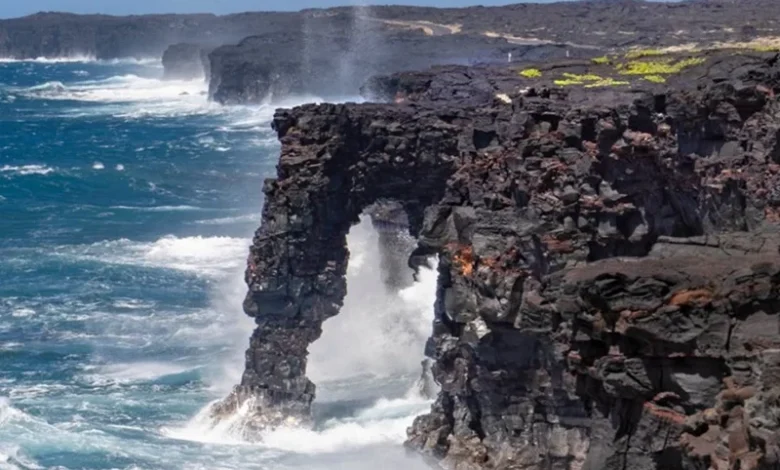
For close to 550 years, a lone arch carved from hardened lava stood firm against the pounding surf of Hawaii’s Big Island. Now, after a run of fierce Pacific storms, the Hawaii ancient Hōlei sea arch collapses into the sea, finally breaking apart after years of visible cracking. Its fall closes a long chapter for one of the most photographed natural landmarks inside Hawaii Volcanoes National Park, a site that drew visitors from every corner of the globe.
What Happened to the Hōlei Sea Arch
The arch stood near the end of Chain of Craters Road on Hawaii Island, rising about 90 feet above the water. It took shape centuries ago when molten lava from an old eruption poured into the ocean and hardened into steep cliffs. Over generations, the constant pounding of waves hollowed out a cave in that rock, and the cave slowly widened until it became the graceful arch people travelled across the world to see.
Rangers had flagged the structure as unsafe for years. Cracks first showed up on the cliff face back in 2020, which led the park to shut the viewing trail to foot traffic. Then in 2022, a powerful swell tore away a large chunk from the arch’s base, leaving it standing on what officials once called a thin geological thread. This year’s stretch of unusually rough storms finished the job that earlier waves had already begun, a pattern of coastal erosion that geologists have been tracking at the site for years.
Why This Matters Beyond Hawaii
This isn’t just a story about one rock formation vanishing from one coastline. Sea arches of this kind exist all over the planet, from the cliffs of Portugal’s Algarve coast to Australia’s Great Ocean Road, and every single one of them is on borrowed time. Coastal scientists have long noted that warmer ocean temperatures and stronger storm patterns are speeding up erosion at many of these sites, cutting short the lifespan of formations that once felt permanent to the people who grew up visiting them.
For readers anywhere in the world, this collapse is a plain reminder that volcanic and coastal landscapes keep changing shape, reshaped again and again by the very ocean that first created them.
Lessons for Travelers Visiting Natural Landmarks
Anyone planning to visit similar formations, whether in Hawaii, Ireland, or Thailand, should keep a few simple things in mind:
- Check official park or tourism authority websites before travelling, since access can change without much notice
- Stay behind ropes and barriers near cliff edges, even if the rock looks solid from where you’re standing
- View unstable sites only from marked safe zones, just as rangers had long advised at Hōlei
- Travel with a licensed local guide who keeps track of current ground conditions
- Carry travel insurance that covers changes to your itinerary caused by site closures or natural events
Conclusion
The fall of the Hōlei Sea Arch marks the end of a landmark that outlasted centuries of storms, but it leaves behind a quiet lesson for travelers everywhere. The world’s most beautiful coastal sights are borrowed time, not permanent fixtures, so see them with care and respect while they still stand.
Track the latest climate changes.
Is Your Seafood Becoming Riskier?
Find how El Niño affects ocean pollution.
Why Are Heatwaves Getting Worse?
Check out the link between monsoons and El Niño.
What Happens During Super El Niño?
See the major weather changes ahead.
Could Food Prices Rise Soon?
Uncover how climate affects grocery costs.
How Will Weather Patterns Change?
Get to know this summer’s biggest climate shifts.