

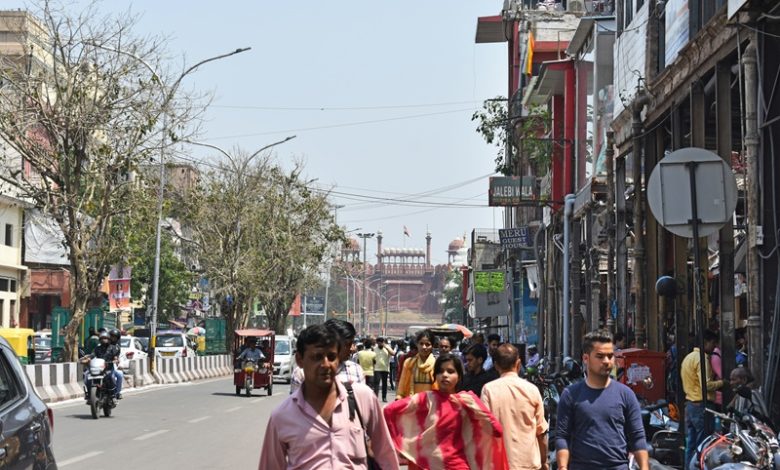
The erratic weather change in Delhi, with its shift from extremely hot temperatures to thunderstorms, is no coincidence; Delhi’s erratic blocks of both seasonal systems have caused unstable atmospheric conditions that contribute to this weather change.
The Real Reason: Two Weather Systems Colliding
Currently, Delhi is “caught” in between:
Dry/hot winds (loo) that are located in northwest India → causing heatwave conditions
Moisture coming into the area from the Bay of Bengal → causing clouds to develop and produce thunderstorms and rain
When both of these weather systems come together, it creates instability in the atmosphere and sudden changes in temperature which can go from being scalding hot to having rain at your local park within a few hours.
The Role of the Jet Stream
The jet stream pattern in 2022 has also contributed to the 91 degree days/month that will continue to occur because of the extreme wave-like jet stream pattern that has developed this year.
Therefore with the jet stream being both elongated and also has a very slow rate of speed, the dry, hot air of North India can remain for extended periods of time. At the same time there will be very intermittent periods of moisture flowing into North India throughout 2020.
Environment Insights You Should Read
Why Indoor Air Quality Important?
Explore how plants improve air.
Why Tropical Plants Bloom Changing?
Discover impact on farming cycles.
How Warming Reshapes Coastal Living?
Check risks for island communities.
Why Heatwaves Return Immediately After Rain
While it is unlikely you will experience prolonged attempts at relief from heat when it is raining in Delhi, you should not expect the rain (when it does rain) to occur after another period of extended heat.
The following is why you will not have extended periods between rain events in Delhi.
- After a rainfall event occurs:
- Only a small amount of cloud coverage remains
- A very short periods of sunlight will appear
- The humidity will increase causing additional discomfort.
What This Means for the Coming Days
From the information provided above, Delhi likely continues to have:
1) alternating hot (38-40°C) days;
2) sporadic thunderstorms;
3) high humidity following all rainfalls.
We anticipate these conditions to persist until such time that monsoons establish stable weather systems, which usually occurs by late June.
Final Words
The weather experienced during June 2026 in Delhi is inconsistent – the current unstable climate is purely by design. We can anticipate continued patterns of heating → severe thunderstorms → high humidity → continued heat until summery monsoon conditions occur again, then this will be considered one of the most unpredictable pre-monsoon seasons in recent memory.
FAQs
1. Why is there rain falling in Delhi during a heatwave?
Rain is falling in Delhi because the heating and rainfall systems are creating atmospheric instability.
2. Does this series of rains signify that Delhi’s heatwave has concluded?
There is no correlation between this series of rains and the breaking of the existing heatwave.
3. Why does it feel warmer and more humid outside after each rainfall event?
Following short thunderstorms, the moisture from rain remains suspended in the atmosphere.
4. When will stable weather return to Delhi?
Stable weather conditions will be reestablished when the monsoon arrives at the end of June.