
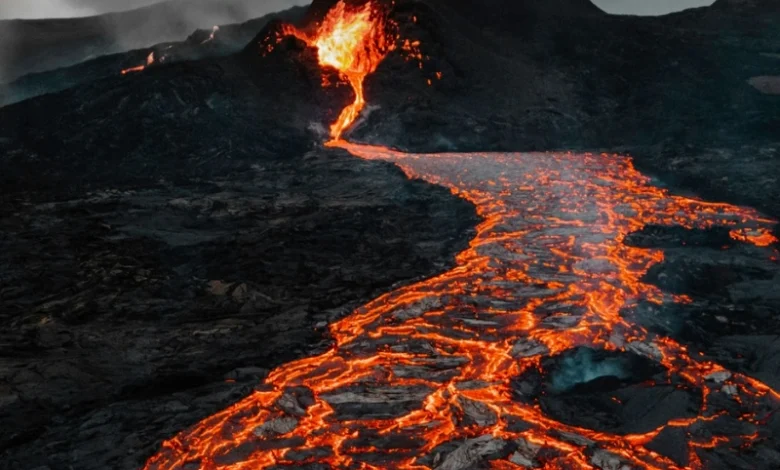
Large volcanic eruptions can lead to the cooling of the Earth for a period of time that may last for several years. In 1991, the eruption and pinatubo release of around 15 to 20 million tons of sulfur dioxide into the stratosphere caused the drop of global temperatures by approximately 0.5 degrees Celsius.
How is the cooling achieved?
Sulfur dioxide creates microscopic sulfate droplets that reflect the light of the sun back and stay in the atmosphere for several years. The eruption of Tambora in 1815 led to lowering global temperatures by 1 degree Celsius during the “year without summer” in 1816.
What do you know about the volcanoes deep underwater?
Scientists were afraid that the volcanic eruption of Hunga Tonga did have some negative effects on our climate because it released approximately 150 million tons of water vapor that is considered to be a greenhouse gas. A study led by UCLA has shown that the eruption resulted in cooling the Southern hemisphere by 0.1 degrees Celsius, as there was more sulfate than vapor released.
Will this help to negate the effects of warming?
No. Volcanic cooling lasts only a few years, but CO2 lasts much longer, so human emissions are the main driver of long-term warming. The same idea inspires proposals to spray sulphur into the stratosphere, whose risks we discuss in solar geoengineering.
Read more Environmental Changes
Is Antarctic ice disappearing?
Find out why it matters beyond the poles.
Is extreme heat a health crisis?
Learn why heat is becoming a public health threat worldwide.
Why are cyclones strengthening faster?
Read about rapid intensification and why it matters.
Are coral reefs on the brink?
See what mass bleaching means for the ocean.
Are Himalayan glaciers melting?
See what it means for South Asia’s rivers.