Plankton Bloom Turns Thai Island Waters Bright Green, Raising Tourism and Marine Safety Concerns
Thailand plankton bloom turns waters bright green, raising tourism and marine safety concerns. Learn causes, risks, and travel tips! Plan your trip wisely.

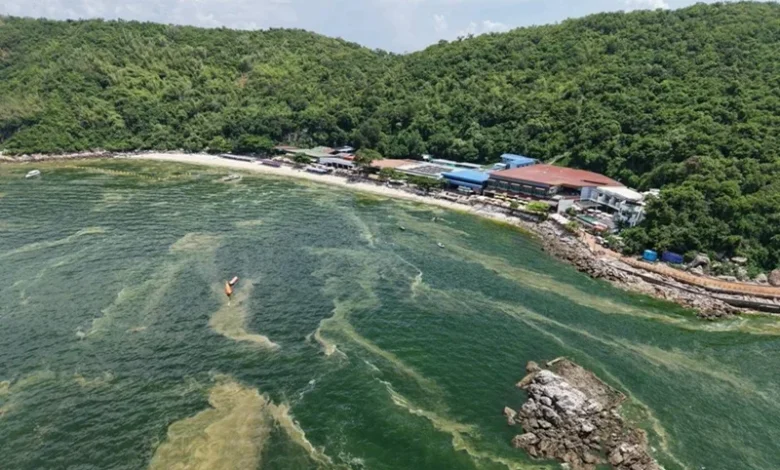
Clear blue water was not on offer to visitors to a well known Thai island this week. The plankton bloom turns thai water green smell water is strong enough to catch from the shore. That’s what happens when there is a plankton bloom, a natural event that occurs when tiny sea creatures multiply very quickly in a short period of time. While the sight looks alarming, experts say it is not entirely unusual for Thailand’s coastline, although the scale and frequency of these blooms seem to be increasing.
What Triggers a Plankton Bloom in Thai Waters
In the event that the conditions in the sea suddenly favour the rapid growth of microscopic algae, plankton blooms occur. This is a combination of several factors, usually on Thailand’s eastern seaboard:
•Warm sea temperatures in hot and rainy seasons
•Still, quiet water with little wave action.
•Runoff and wastewater are washing more nutrients, such as nitrogen and phosphorus, into the sea.
•Heavy rain washing waste from nearby towns and resorts into coastal waters.
The nutrients build up and are consumed by tiny plankton that grow in numbers well beyond their regular levels. This is sometimes called an algal bloom, and in some cases it can pull oxygen out of the water, hurting fish and other marine life nearby.
Why is the water green and stinky?
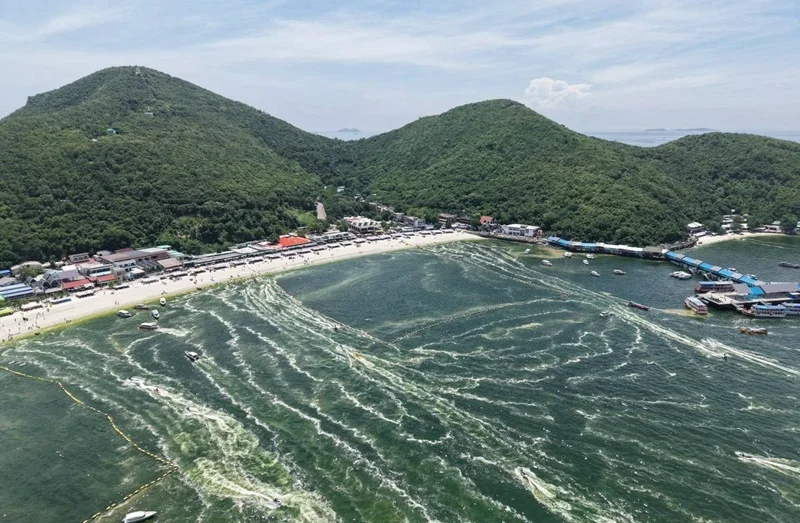
The bright green colour comes from the sheer density of plankton cells in the water, which changes the way light bounces off the surface. When the older plankton die and decay, bacteria decompose them and release a sulfur-like smell that many visitors say smells like rotten eggs. Local marine authorities usually test the water afterward to see if the bloom is producing harmful toxins, or is just a visual and smell issue.
Effect on Tourism and Local Communities
For island communities that rely on tourism, a green, smelly sea is bad timing, especially in the busy travel months. Hotel staff and boat operators often receive worried questions from guests, while small scale fishermen could see real financial losses if the bloom lasts several days or kills off fish stocks. In past incidents, mussel farmers along Thailand’s coast of Thailand reported thousands of dollars lost in one bloom cycle.
What Visitors and Residents Need to Know
The health risk from a plankton bloom is generally low for people on land, but it is best to avoid direct contact with heavily affected water until local authorities confirm it is safe. Typically, the events are tracked by Thailand’s Department of Marine and Coastal Resources and updates are posted on local news media and government websites. Scientists are increasingly connecting climate change and warmer seas to the rising frequency of these blooms, making regular monitoring all the more important each year. Beach-bound travellers should check recent local reports before swimming, and those living near affected coastlines should watch for official advisories, not just social media photos.
Conclusion
The green, stinky waters around this Thai island are a stark reminder of the close ties between ocean health and human activity. As these blooms become more frequent along Thailand’s coast, better wastewater management, less nutrient runoff and continued monitoring will matter. For now, the best and smartest thing a traveller can do is check official updates before heading to the beach.
Track the latest climate changes.
Is Your Seafood Becoming Riskier?
Find how El Niño affects ocean pollution.
Why Are Heatwaves Getting Worse?
Check out the link between monsoons and El Niño.
What Happens During Super El Niño?
See the major weather changes ahead.
Could Food Prices Rise Soon?
Uncover how climate affects grocery costs.
How Will Weather Patterns Change?
Get to know this summer’s biggest climate shifts.