
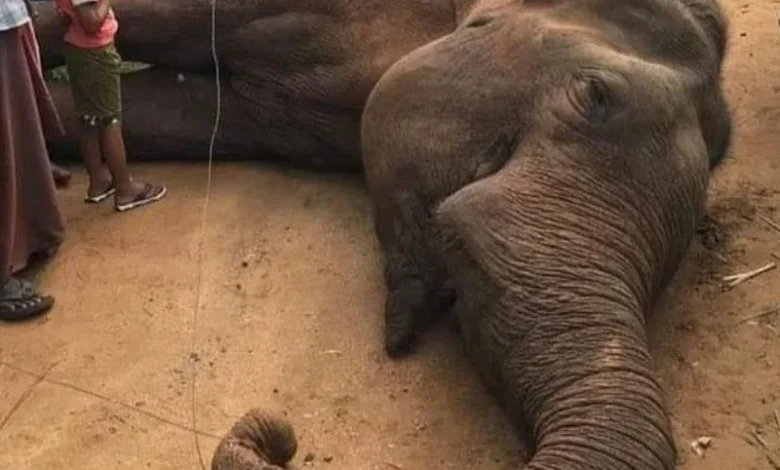
Early one morning near Galgamuwa, in the island’s northwestern dry zone, a wildlife enthusiast noticed something was wrong. A tusker he had watched for years was limping. A closer look revealed a bullet wound just above the knee. Sri Lanka elephant, That animal is widely regarded as Sri Lanka’s tallest living tusker. His injury has pulled the country back into an old, unresolved argument. How do you protect a handful of irreplaceable elephants when they share almost every inch of land with humans? Officers from the Department of Wildlife Conservation reached the site soon after and began emergency treatment. The incident involving this Sri Lanka elephant has worried conservationists and ordinary villagers alike, and it has reopened an old wound of its own: Sri Lanka’s long struggle over human-elephant conflict.
Why Tuskers Keep Getting Shot
Elephants in Sri Lanka rarely stay inside forest boundaries. Paddy fields, village roads, and ancient elephant corridors often sit right next to each other. An animal wandering near a farm at night is sometimes met with firecrackers, homemade guns, or improvised traps. Tuskers draw extra attention because of their size and ivory, which makes them more visible targets during these clashes. Over the past two decades, several celebrated tuskers have died this way. Some from gunshots. Some from illegal electric fences. Others from injuries that slowly worsened once an animal could no longer walk or feed properly, a fate that befell the tusker Bhathiya in 2025.
Can Armed Protection Really Work?
Some conservation groups, including the Society for Conservation of Wild Elephants, now want Sri Lanka to copy Kenya’s approach, where legendary elephants like Ahmed were given round-the-clock armed guards and lived long, peaceful lives inside large conservancies. It sounds appealing on paper. But people who study Sri Lanka’s terrain, including the Sri Lanka Wildlife Conservation Society, point to a basic problem: there is no equivalent of Kenya’s open wilderness here. A tusker in Sri Lanka might cross six villages, two highways, and a dozen farms in a single week. That makes constant physical guarding almost impossible to sustain.
The Real Problem Is Livelihood
Most experts agree the harder issue is economic, not military. A farmer who wakes up to find his entire harvest trampled overnight is unlikely to feel sentimental about the animal responsible, however rare or culturally important it may be. Until families living near these corridors have steadier, safer sources of income, elephants will keep being treated as a threat rather than a treasure worth protecting.
Practical Steps Worth Considering
- Expand community-led crop guarding programs run with the wildlife department
- Encourage non-farming livelihoods in conflict-heavy zones through local and private investment
- Fit a few key tuskers with GPS collars for faster emergency response
- Build stronger village-level alert systems along known elephant routes
- Investigate gunshot and electrocution cases as serious wildlife crimes, not routine accidents
Conclusion – Sri Lanka elephant
What happened to this tusker is not an isolated accident. It is a symptom of a much older tension between people trying to survive and animals trying to move through land that was once entirely theirs. Lasting change will need quicker veterinary response, smarter tracking of vulnerable elephants, and real economic support for the communities living closest to them. Protecting Sri Lanka’s remaining tuskers will take more than good intentions. It needs a plan both sides can actually live with.
Wildlife stories worth watching closely.
Which Countries Face Wildlife Loss?
Check out global hotspots where endangered species need urgent protection.
What Makes This Monkey So Rare?
Find out about the newly discovered orange-lipped monkey in Congo.
Why Are Andaman Species Disappearing?
Uncover why these unique species need immediate conservation efforts.
Can AI Help Save Wildlife?
See how AI is transforming endangered wildlife monitoring.
Which Species Are Near Extinction?
Look into wildlife facing the highest risks of disappearing.