
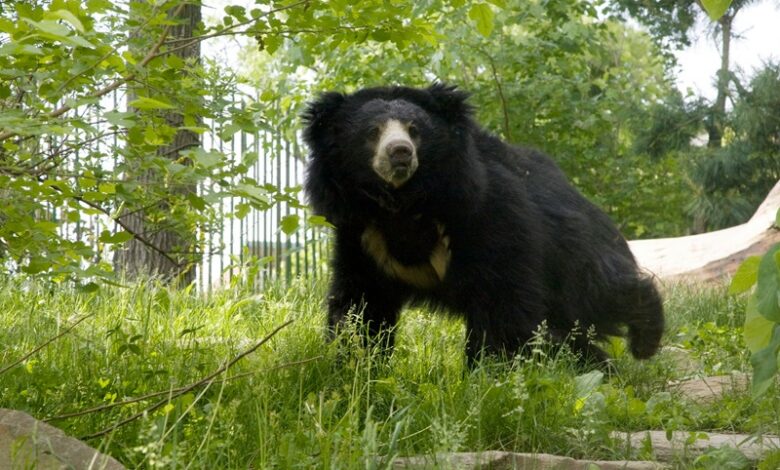
Most people think of sloth bear as shaggy insect hunters, not gardeners. But new fieldwork in western India shows these bears play an unexpected role in seed dispersal, helping to shape the very forests they inhabit. It’s a reminder to a global audience thinking about wildlife conservation that even the least glamorous animals can prop up an entire ecosystem.
Findings of the study
Researchers in the Aravalli hills of Rajasthan studied the droppings of sloth bears for a year to find out what the animals eat and how it impacts the plants nearby. They discovered that sloth bears are seasonal eaters, eating fruit extensively in the winter and switching to termites and insects when fruit becomes less available in the summer.
When a bear eats fruit, it swallows the seeds whole. Those seeds pass through the digestive system and drop, often quite a distance from the parent tree, encased in a ready-made pile of natural fertilizer. Scientists found that some native plant species actually germinated better after passing through a bear than they did directly off the tree.
Why It Matters for Forests Everywhere
This is not only a curiosity for wildlife researchers. In dry, semi-arid areas the forest has a hard time regenerating naturally because the seeds tend to fall near the parent plant, competing for the same limited water and sunlight. This problem is solved by big animals that carry seeds over long distances.
•Sloth bears disperse seeds far from parent trees, minimizing competition among young seedlings.
•The passage through the bear’s gut can remove pulp from the fruit, which can sometimes enhance germination.
•Bears aid the recolonization of degraded forest patches by native trees and shrubs.
•Their droppings are a natural fertilizer for new seedlings.
A Side Effect That’s Tricky
The research also revealed a less welcome finding. Researchers found that sloth bears helped disperse Lantana camara, one of the world’s most damaging invasive shrubs, although the effect was modest, with only a small share of the invasive seeds actually germinating. This goes to show that ecosystems are rarely simple. The same animal that helps native trees recover can also help, in a small way, a plant that is choking out other species.
Extreme heat is changing how people live worldwide.
Which Countries Face Year-Round Heat?
Check out the hottest places.
How Is Heat Reshaping Daily Life?
Find out what’s changing fastest.
Why Is East UP Still Sweltering?
Uncover why rain isn’t cooling towns.
What Are Tropical Nights Exactly?
See simple ways to stay cooler.
Which Household Products Become Dangerous?
Explore heat-related safety risks at home.
The larger context
Scientists involved in the study say birds, insects and other mammals such as civets likely play similar roles, and the next step is to untangle exactly how much each species contributes. Clearly, large omnivores like sloth bears deserve a greater focus in conservation planning—not only as endangered species worth saving, but as active engineers of their surrounding forests.
Conclusion
Sloth bears may never be glamorous wildlife, but this research proves that they are quietly essential. By protecting them, we’re also protecting the forests they grow, one seed at a time.