
Drive along Gujarat’s coast today and you’ll see thick green belts of trees standing between the villages and the sea. Gujarat mangrove shield, Most people passing by wouldn’t guess that many of these mangrove forests exist because a small group of villagers decided, back in the 1980s, that a few saplings were worth the effort. That decision, repeated across dozens of villages over forty years, is what now gives this stretch of India a working coastal shield against storms and rising tides.
Why Gujarat Needed a Natural Barrier
Gujarat has the longest coastline in India, running past 1,600 kilometres. It’s also one of the busiest, with ports, refineries and salt works crowding the shore. For the fishing families who’ve lived here for generations, the Gulf of Kutch has always been their livelihood, but by the mid-1900s the mangrove cover that once protected the coast had thinned out badly. When a severe cyclone hit Kutch in 1991, the damage made it clear how exposed the region had become without that natural buffer.
How Villagers Rebuilt the Mangroves
There was no grand plan at the start. It was mostly women from fishing and salt-panning households who began guarding the mangroves that had survived and planting new ones wherever they could. The Gujarat Forest Department, along with NGOs and self-help groups, eventually stepped in to support what villagers had already started.
A few things made the effort stick:
- Sticking to hardy native species, mainly Avicennia marina, suited to Gujarat’s dry, salty soil
- Bringing fishing communities into the work directly, since mangroves double as fish nurseries
- Letting women-led self-help groups run the nurseries and plantation sites
- Drawing in help from the Gujarat Ecology Commission and corporate conservation programmes
The Coastal Shield in Action
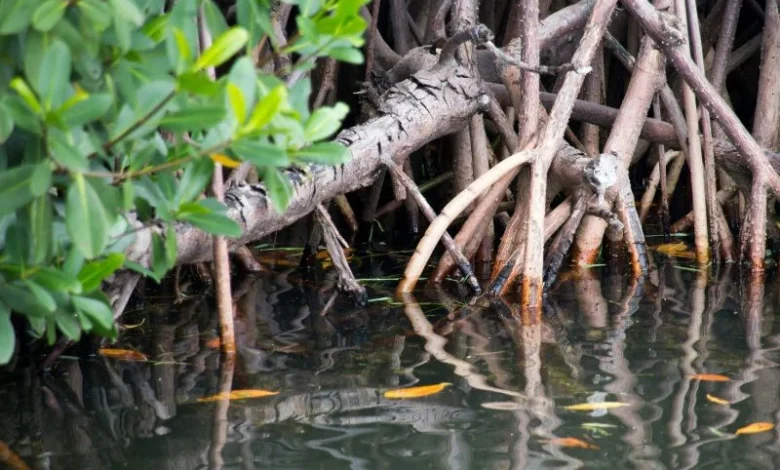
The tangled roots of mangroves hold soil in place and break up wave energy before it reaches the shore. That alone cuts down erosion and softens the blow of storm surges in a way sea walls often can’t match. On top of that, the forests support coastal fisheries, giving villagers an income beyond farming and fishing alone.
What This Means for Coastal Communities Worldwide
Gujarat now has one of India’s biggest mangrove covers outside the Sunderbans, and other coastal regions facing rising seas and stronger storms have started looking at this model closely.
A short checklist for anyone considering something similar:
- Pick native mangrove species that suit local soil and salinity
- Start with a local group, ideally including women and fishing households
- Reach out to forest departments or environmental NGOs for support
- Keep grazing animals and construction away from young nurseries
- Check coastal regulation zone rules before planting near ports or industry
Conclusion – Gujarat mangrove shield
What happened in Gujarat wasn’t a big government scheme rolled out overnight. It was villagers, mostly women, deciding one plant at a time that their coast was worth saving. Decades later, those same plants form forests that stand between their homes and the sea.
More stories on extreme weather.
Why Is Bangladesh Facing Flood Risks?
Find the latest climate insights.
What’s Driving India’s Weather Split?
Check out the extreme weather patterns.
Is Sonamarg Travel Safe Today?
Get to know the latest advisory.
How Severe Are China’s Floods?
Browse the latest emergency updates.
Why Is Northeast India Flooding?
Uncover the unusual jet stream effects.