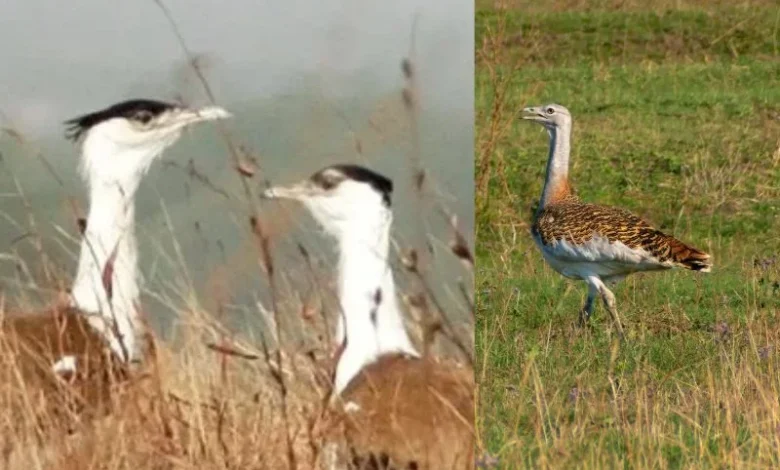
The Great Indian Bustard is the heaviest bird that is still capable of flying and it is in the critically endangered species category. The latest result of a survey conducted by the Wildlife Institute of India shows that there are about 130 birds located mostly in the Thar desert that is situated in Rajasthan, India.
Why Is It Dying?
- Power Lines: The birds do not have a clear sight in front which causes them to crash with the power lines.
- Lost Habitats: They only live in 16% of the lands that are available for them in the Thar.
- Other Factors: Birds that kill eggs and disruption during the nesting period.
What Was the Order Given By The Court?
The supreme court ordered high-risk power lines underground or redirecting them away from their region, creating new corridors for power lines and stopping the installation of wind power generation facilities and solar plants in the main habitats of the Bustard. The government declared that underground transmission wiring cannot be established in the case of gigantic power lines.
Is There Any Hope?
Population estimates have remained stable at 110-150 birds. Sam and Ramdevra run captive breeding centers where eggs collected from the wild are hatched into chicks for future release and the Thar is considered to be the last possible landscape for recovery. Wild breeding populations are only found in Jaisalmer and Barmer.
You May Like It:
Which species are bouncing back?
Meet the endangered species making a comeback.
Which Species Are Recovering?
Meet 10 endangered species making a comeback.
Why Do Insects Matter?
Learn their role in ecosystems.
Can Renewables Deliver a Greener Future?
Weigh the promise and the limits.
Can solar panels float on water?
Discover how floating solar could add clean power.