Carbon Capture Technology: Can Scientists Really Pull CO₂ Out of the Sky and Cool the Planet?
Carbon Capture Technology removes CO₂ from air using direct capture systems, supporting climate goals alongside renewable energy and emissions cuts.

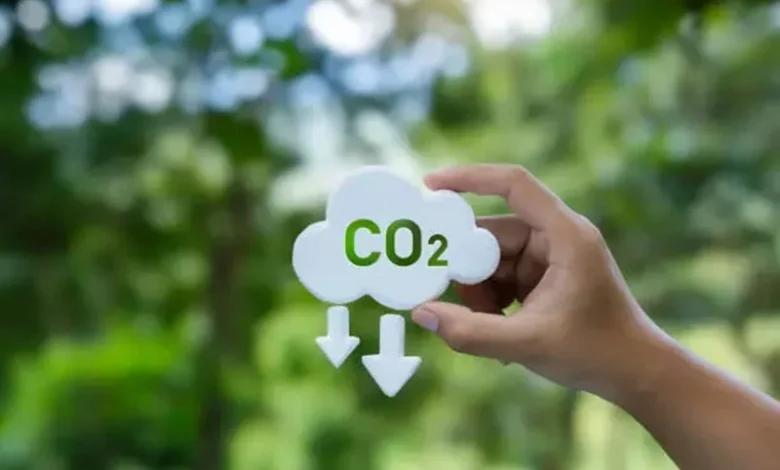
Humans release more than 37 billion tonnes of carbon dioxide every year, mainly from burning coal, oil and gas. For decades, the basic plan to fight climate change was straightforward: stop putting so much CO₂ into the atmosphere. A new question is now being asked in labs and government offices all over the world: can we pull the CO₂ that is already up there back out again? This is where direct air capture comes in, and it’s fast transforming from a lab experiment into real infrastructure.
Carbon Capture Technology: In Simple Terms
It’s like a giant air filter, except it filters out carbon dioxide instead of dust. Big fans draw air through a chemical liquid or solid that snatches CO₂ molecules. The gas is then extracted, compressed and either stored deep underground in rock formations or converted into products such as fuel, concrete or fizzy drinks.
The two main types you should know are:
•Point-source capture – installed at a factory or power plant chimney, catching CO₂ before it even gets into the open air.This is cheaper, at about $38 to $85 a tonne, because the gas is more concentrated at the source.
•Direct air capture (DAC) – extracts CO₂ directly from the open air, which has less than half of one per cent CO₂. This method is much more expensive, often between 280 and 520 dollars per tonne, because the gas is so thinly spread.
Why 2026 is a watershed year
The sector has moved beyond pilot projects this year. Large facilities such as Stratos in Texas and Project Greensand in Denmark are now running at commercial scale, not just as demonstrations. Governments are backing this move with real money. The United States has a tax credit for up to $180 per tonne of CO₂ that is permanently stored, and the European Union has set up a certification system for carbon removal to count towards official climate targets.
Can this tech actually combat global warming?
One thing scientists are clear about: carbon capture is a tool, not a cure. Even the most bullish industry forecasts see only a few hundred million tonnes being trapped per year by 2030, a tiny fraction of what humans spew out annually. But renewable energy, improved public transport and less fossil fuel use still really matter much more.
What This Means for Ordinary People
You don’t need to own a factory to be concerned with this change. Ordinary people globally are already engaging with carbon markets, often without realising it:
•Some banking and mobile payment apps now let users “offset” purchases by donating to certified carbon removal projects.
•More airlines are also providing optional, at-checkout carbon offset add-ons, some of which finance direct air capture instead of tree planting.
•Local governments are starting to talk about carbon removal in their public climate adaptation plans, alongside more familiar measures like clean energy subsidies, in areas vulnerable to flooding or heat stress.
•Across a number of countries, community and cooperative groups are beginning to track and report local emissions data that underpin national climate commitments.
A Short Checklist To Help You Get Involved
•Before you sign up for any random third-party offset schemes, find out if your bank, mobile wallet or investment app has a verified carbon offset option.
•Check to see if your country’s or region’s climate policy has mentioned any carbon capture funding.
•This will determine future job growth and infrastructure spending.These are still cheaper and more proven than high-tech removal.
•Support local recycling, composting and clean energy programmes.Be suspicious of offset claims without a third-party verification or a public registry number.
The Bottom Line
The carbon capture technology is no longer a pipe dream. It’s running today, in Texas, Iceland and Denmark, backed by real government money and real corporate contracts. It will not replace the essential work of cutting emissions at source, but it is becoming a real part of the climate toolkit, and its cost is likely to continue to fall through the end of this decade.
Explore More Clean Energy Stories
Why Oppose Deep-Sea Mining Now?
Discover why global protests are growing.
Is Clean Energy Winning Today?
Check out how renewables are overtaking fossil fuels.
Why Is COP30 Facing Backlash?
Find the latest clean energy debate.
How Does Green Fuel Help?
Look into sustainable aviation fuel benefits.
Why Is Solar Now Cheaper?
See how solar beats fossil fuel costs.