
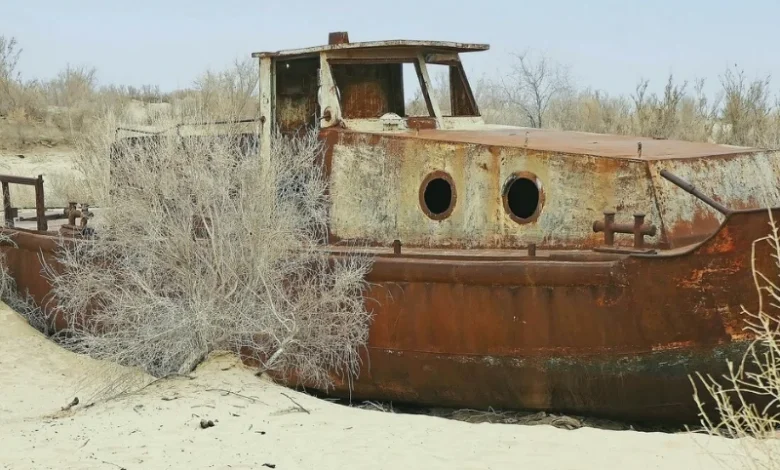
The Aral Sea used to be the largest lake in the world, after the Caspian Sea, Lake Superior and Lake Victoria. But Aral Sea disaster soon after the water was diverted from its two main rivers for the purpose of irrigating land for the crops of rice and cotton, the sea shrank greatly and by more than 90 percent.
What Was Lost?
With its seabed turned into the desert called the Aralkum, the dust full of salt, sodium pesticides and fertilizers started moving across fields and towns, causing damage to the agriculture and affecting people’s living conditions in the surrounding areas, including the region of Karakalpakstan.
What was the Aral Sea disaster, and was the sea ever saved?
The Kok-Aral dam in Kazakhstan, which was completed in 2005, has restored the water level in the Northern Aral Sea, which increased by 42 percent in 2025 and reached 27 billion cubic meters. The Dam has also separated the Southern Aral Sea, which is now considered much smaller and salter.
What It Teaches Us?
The successful diversion of water from the rivers for agricultural purposes led to the negative consequences for the climate and ecology. In order to partially recover from the consequences of the destruction, it is essential to plan the recovery of rivers.
Related Reads on Environmental Changes
Is sand really running out?
Explore why the world is short of sand.
Where do old clothes go?
Inside Chile’s fashion graveyard in the Atacama.
Will countries hit food goals?
Find out why most may miss 2030 targets.
Are Himalayan glaciers melting?
See what it means for South Asia’s rivers.
Can growing food indoors help?
Weigh the pros and cons of vertical farming.