
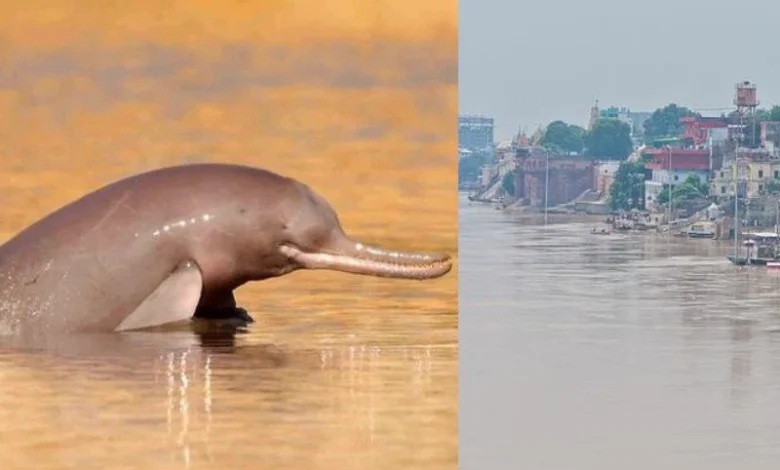
Some places seem too far gone for anything to live in them. The Buriganga River, flowing right past the heart of Dhaka, is one of them. Or so it seemed, until researchers found something nobody quite expected: a small, breeding population of endangered dolphins still calling this filthy water home. Ganges river dolphins, The Buriganga River has been called biologically dead for years. Somehow, Ganges river dolphins haven’t gotten the memo.
A River That Should Have Killed Them Off
At just 29 kilometres long, the Buriganga isn’t a big river. But it takes in an enormous amount of punishment. Hundreds of tanneries, textile mills and dyeing units along its banks send their waste straight into the water, most of it untreated. Tests have picked up chromium, lead and arsenic at levels well past what’s considered safe. The native fish that used to live here? Largely gone.
That’s what makes a recent 12-month survey so striking. Published in the Journal of Asia-Pacific Biodiversity, it tracked a 27-kilometre section of the river and turned up roughly 20 dolphins, spread across 25 identified hotspots. Most sightings clustered in the cooler winter months.
So How Are They Still Here?
The likely answer comes down to what’s for dinner. With the original fish population wiped out, researchers believe the dolphins have switched to eating suckermouth catfish, an invasive species tough enough to handle even this kind of pollution. It’s not an ideal diet, but it seems to be working.
And here’s the part that genuinely surprised scientists: calves accounted for nearly 16 percent of all sightings. That’s not a population barely surviving. That’s a population still having babies.
Zooming Out to the Rest of Bangladesh
A much larger, separate survey covered almost 4,900 kilometres across 45 rivers and counted 2,307 Ganges river dolphins nationwide. Numbers like this help conservation groups figure out where their limited money and staff should actually go.
On paper, Bangladesh already has some protections. Back in 2012, the government created wildlife sanctuaries in the Sundarbans specifically for freshwater dolphins. There’s also a 2002 law banning gillnets, the type of fishing net most likely to trap and drown a surfacing dolphin. The gap, as usual, is enforcement. The law exists. Following it is another matter.
What Actually Needs to Change
Talk to people who study these animals and a few points come up again and again:
- Untreated industrial waste has to stop flowing into rivers like the Buriganga
- The gillnet ban needs real enforcement, not just a line in the legal code
- Boat traffic should be reduced in areas where dolphins gather
- Long-term monitoring has to continue, not just happen once every few years
- Fishing communities need a seat at the table, not just rules handed down to them
Conclusion – Ganges river dolphins
Finding dolphins in a river this polluted isn’t a happy ending. It’s a warning dressed up as good news. These animals are tougher than anyone gave them credit for, but toughness has limits, and nobody knows exactly where those limits sit. If there’s one thing worth taking from this story, it’s that a river is far easier to protect before it dies than to fix after the fact.
More stories on extreme weather.
Why Is Bangladesh Facing Flood Risks?
Find the latest climate insights.
What’s Driving India’s Weather Split?
Check out the extreme weather patterns.
Is Sonamarg Travel Safe Today?
Get to know the latest advisory.
How Severe Are China’s Floods?
Browse the latest emergency updates.
Why Is Northeast India Flooding?
Uncover the unusual jet stream effects.