
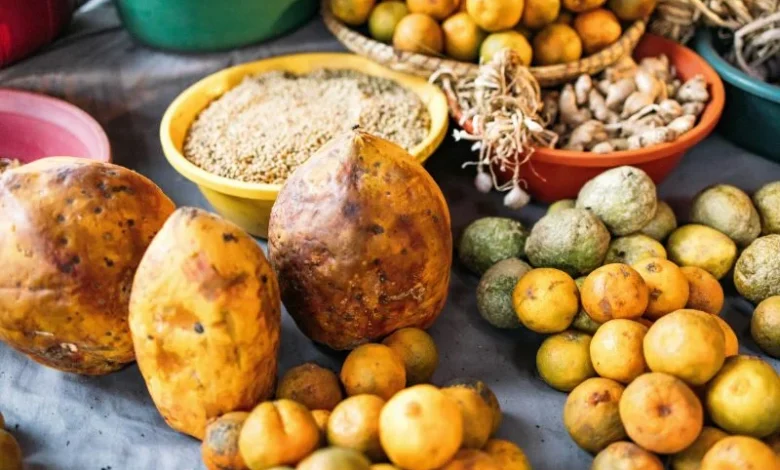
Ask an older relative about a fruit they used to eat as a child and there’s a good chance they’ll describe something you’ve never even seen in a shop. It’s that gap between memory and market that’s the problem. indigenous fruits, With commercial crops taking over farmland and food habits swinging to whatever looks familiar on a supermarket shelf, indigenous fruits are quietly slipping out of daily diets. The simplest way to bring them back, perhaps, is to rekindle demand for them before the last of the trees are cut down or forgotten.
Why Indigenous Fruits Are Vanishing
Local fruit trees don’t typically fit into modern supply chains. Many ripen quickly and bruise easily, fruit for only a few weeks a year and grow in small, uneven quantities that do not travel well long distances. Instead, farmers are encouraged to grow exotic, more lucrative crops, as retailers want produce that looks uniform and sits well on a shelf.
Nor have cities grown out. Villages are being emptied of their families and the home gardens and mixed farmland that once held these fruit trees are being cleared for housing and roads. Younger people rarely taste these fruits while growing up and therefore never learn their names, the proper season for picking them or how to use them at home. That knowledge fades and the demand fades.
The Hidden Value of Local Fruits
These underused fruits are often more nutritious than people think. Many are good sources of iron, vitamin A and antioxidants. In some communities they provide a safety net in lean months when other food is scarce, providing food security for households with limited resources. The trees themselves are important beyond the plate. They shelter pollinators, protect the health of the soil and maintain genetic diversity that may prove valuable as climate patterns continue to change.
What Communities & Consumers Can Do
• Buy seasonal, local, village markets, co-operatives, and small growers’ fruit, not just imported varieties.
• Promote value-added products like fruit jams, preserves, powders and coolers from local fruits.
• Ask local sellers and elders of the community for traditional fruits and their uses.
• Encourage schools and community groups to keep a record of fruit names, seasons and recipes.
• If space permits, plant a local fruit tree in home gardens or community orchards.
The Path Forward
Bringing these fruits back is not about abandoning modern agriculture; it is about giving overlooked species a fair shot next to it. Better documentation, small-scale processing by the growers themselves, and a touch of everyday curiosity from consumers can turn a fruit that once rotted under a tree into something people actually go looking for again. Every jar bought, recipe shared, seedling planted, counts.
More Wellness & Lifestyle Reads
Which Wellness Resorts Stand Out?
Browse the world’s top wellness escapes.
How Will Work Change Ahead?
Discover the trends shaping future workplaces.
Why Book Eco Resorts Now?
Check out this week’s best travel savings.
Drinking Enough Water Every Day?
Find the warning signs of dehydration.
Is AI Hurting The Planet?
Uncover the hidden environmental impact of AI.