
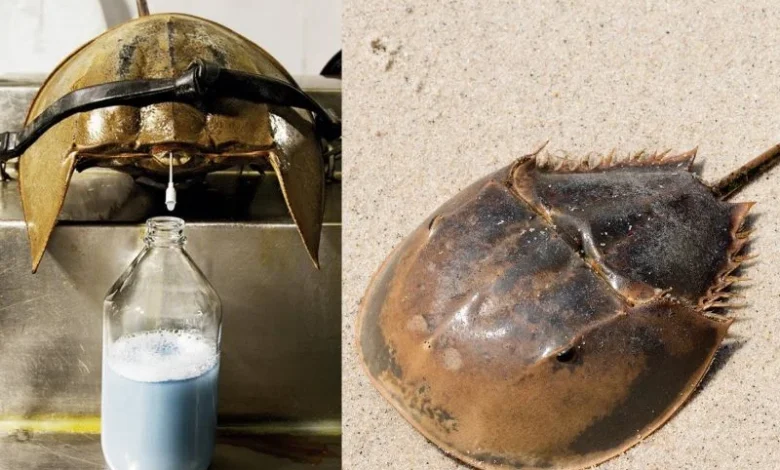
One of the oldest surviving animals on Earth is the horseshoe crab blood. Its ancestors appeared some 445 million years ago, long before the age of the dinosaurs. This peculiar blue-blood arthropod looks a lot like its ancient kin, crawling along coastal beaches still today.
Ancient Survivor
Horseshoe crabs are sometimes referred to as living fossils because their fundamental body plan has not changed all that much for millions of years. They aren’t true crabs but are related to them. They are more closely related to spiders and scorpions . They are arthropods .
Their hard shell protects the body, and a long tail helps them turn over when the waves leave them upside down. The tail is harmless and does not sting.
Why Their Blood Is Blue
The strange blood is one of the animal’s most famous characteristics. This is why blood is red . In human blood , iron is used to carry oxygen . Horseshoe crab blood uses copper instead, which gives it its signature blue color.
The blood is also rich in immune cells that are very reactive to specific bacterial toxins. Scientists have used this property to create tests that test medicines, vaccines and medical devices for dangerous contamination.
A Medical Connection With People
There is a very important link between horseshoe crabs and modern medicine. For decades, labs have used the substances extracted from their blood to detect bacterial toxins.
That means an animal living on beaches of North America and Asia has had an impact far beyond its natural habitat. Scientists are also developing alternatives that could reduce reliance on horseshoe crab blood. A synthetic alternative has been approved by the U.S. government, offering another way to protect these ancient animals.
Why They Matter to Coastal Communities
Horseshoe crabs are also a keystone species for coastal ecosystems . In places like Delaware Bay, they gather in huge numbers during spring tides to breed. Their eggs become a key food source for shorebirds that migrate long distances.
Protecting spawning beaches can help wildlife, fisheries and nature-based tourism for local communities. Fishing pressure, habitat damage and biomedical collection are still important conservation issues.
How You Can Help
Visitors to the coast can help these animals by following a few simple steps:
• Stay away from nesting horseshoe crabs.
• Please observe all local beach and wildlife regulations.
• Never collect live animals or shells without permission.
• Keep plastic and fishing debris out of the shorelines.
• Support conservation programs that protect spawning habitat.
Conclusion
The horseshoe crab is more than just a prehistoric-looking animal. This prehistoric-looking creature. This blue-blood arthropod links ancient evolution to modern medicine and coastal wildlife. 445 million years and counting. Still, its future is in the hands of responsible human choices.
Explore more future-ready stories.
How Will Korea Cut Carbon?
Check out the coal phase-out strategy.
Which Countries Beat Urban Heat?
Find the leading cooling initiatives.
Which Cities Are Climate Ready?
Browse the smartest infrastructure projects.
Where Can Vegans Eat Best?
Discover top plant-based food destinations.
Which Cities Redefine Public Spaces?
See the world’s most innovative urban designs.