
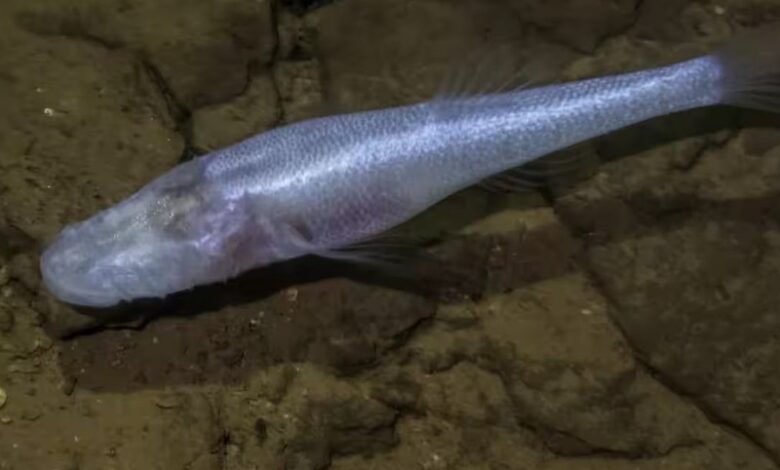
American biologists living far beneath a former Alabama chemical weapons site have confirmed the discovery of a brand new species of cave-dwelling fish. It’s been dubbed Demogorgonichthys arcanus, but the pale, eyeless beast has already been dubbed the demon cavefish by researchers and locals alike. This finding suggests that even well-studied places still have surprises in store for a world audience following biodiversity news.
A Discovery No One Expected
The demon cavefish was discovered in Bobcat Cave on Redstone Arsenal, a military base near Huntsville, Ala. This is not untrodden wilderness. The cave has been monitored for decades because it is home to the endangered Alabama cave shrimp. But a totally new fish, unrelated to any known group of cavefish, had so far escaped attention.
The pale fish was spotted by biologist Matthew Niemiller of the University of Alabama in Huntsville during a routine survey. His team, working with colleagues from Auburn University and Mississippi State University, confirmed through genetic testing that this fish was not just a variation on an existing species but was in its own new genus.
Why the history of chemical warfare matters
Redstone Arsenal did produce chemical weapons during and after WW II. This history is part of why the discovery has captured the world’s attention. Yet for decades, a previously unknown vertebrate had been living undisturbed in the darkness below, despite industrial activity and ongoing efforts to check water quality.
The fish has lost all of its sight. Its light-detecting genes have unique, disabling mutations that are different from those in a related cavefish that also lives in the same cave. This suggests that the two species independently evolved blindness, a rare clue for scientists studying life in isolated, lightless habitats.
Discover smarter ways to go green.
How Can You Cut Emissions?
Check out simple ways to reduce your footprint.
How Much Energy Does AI Use?
Find the hidden environmental costs.
Which Small Habits Make Difference?
Uncover easy actions with big impact.
How Green Is Film Production?
Dive into cinema’s environmental footprint.
What Are The Best Eco Steps?
Explore practical ways to lower emissions.
Implication for Global Conservation
•Caves and underground water systems are poorly understood even in areas adjacent to cities and military bases.
•Even industrial or restricted sites can still support fragile, unique wildlife.
•New species can be hiding in plain sight, even in well-monitored places.
•The cave shrimp and cavefish share the same habitat, so maintaining the quality of the groundwater benefits more than one species.
Conclusion
The demon cavefish is small and blind, but a small fish with a big message. Even in a landscape that has been heavily studied and chemically scarred, nature still holds secrets. This finding is a warning to protect these not always visible ecosystems when habitats around the globe are threatened by pollution and development pressure. The curiosity of today can reveal the secret life of tomorrow.