The Arctic’s Frozen Time Bomb: How Melting Permafrost Could Speed Up Climate Change
Discover how melting permafrost is accelerating climate change by releasing methane and carbon, threatening weather, ecosystems and communities worldwide.

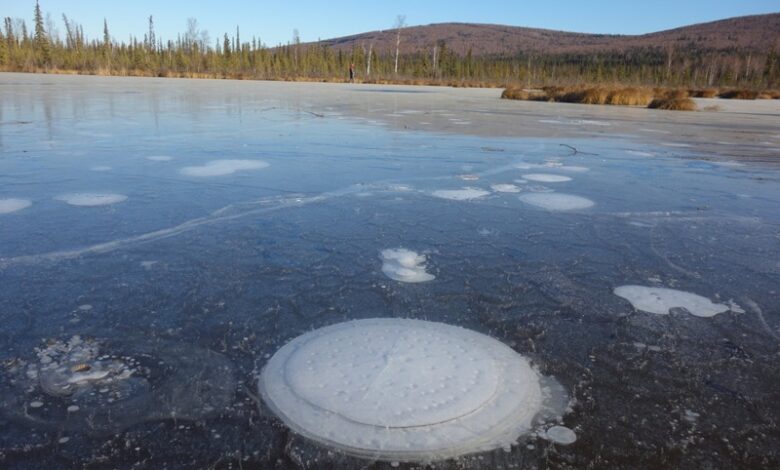
The Arctic is warming almost four times as fast as the rest of the planet. The ground beneath it is beginning to buckle. Scientists call this frozen ground “permafrost.” It’s been quietly sequestering carbon for thousands of years. It is melting and, researchers say, could turn out to be one of the biggest hidden forces behind climate change this century. This is not merely a problem for polar scientists, and it is not a problem for the distant future. It’s an international problem that impacts everything from weather to food prices to coastal security.
What Is Permafrost and Why Should We Care?
Permafrost is ground that has been frozen for at least two years, but much of the permafrost in the Arctic has been frozen for thousands of years. It covers large regions of Siberia, Alaska, northern Canada and parts of Scandinavia. The frozen ground has about twice the amount of carbon that is currently in the entire atmosphere, in dead plants and animals that never rotted away because the cold stopped the rotting.
How Thawing Permafrost Creates a Dangerous Feedback Loop
When permafrost thaws, microbes in the soil “wake up” and start to break down that ancient organic material. During this process carbon dioxide and methane are released into the air. More greenhouse gases mean more warming and that means more melting of permafrost. Scientists call this a feedback loop, and new research suggests it could happen decades sooner than predicted by earlier climate models. Studies also show that thawed soil is much more porous, allowing gases to escape much more easily than frozen ground ever did.
Why Should People Away From the Arctic Care?
You don’t have to live near the Arctic Circle to feel the effects. The heat-trapping gases released from melting permafrost are a co-conspirator of the same warming that causes heatwaves, erratic monsoons and stronger storms across Asia, Africa, Latin America and beyond. It also endangers Arctic infrastructure, from roads to pipelines to whole villages, as the ground beneath them softens and shifts.
What Ordinary People and Communities Can Do
Permafrost policy is largely a government and science undertaking, but people and communities have roles to play:
•Support and follow groups that monitor the climate in the Arctic. Public awareness can speed up government action.
•Reduce personal carbon footprints where possible in energy use, travel choices and food habits.
•Support local and national policies on climate adaptation, in particular those that finance early warning systems for extreme weather.
•Get your data from reputable scientific sources, not social media gossip.
•Teach climate literacy in schools and workplaces. Understanding feedback loops like this can help people make better long-term decisions.”
More stories on nature and climate.
Why Save Mangalavanam’s Mangroves Today?
Discover why this ecosystem matters.
Which Mumbai Areas Flood First?
Check out the highest-risk zones.
Why Is Mumbai Getting Hotter?
Find the reasons behind rising heat.
Why Do Wetlands Need Protection?
Learn why these ecosystems matter.
How Is Heat Changing Forests?
Dive into the growing climate impact.
CONCLUSION
Melting permafrost isn’t just an Arctic story. It’s a wake-up call for the planet, showing how warming in one remote corner of the globe can ripple into the everyday lives of the rest of the world. Today, the best thing we can do is to be informed and help lead the charge for stronger climate action, so we can slow down tomorrow’s damage.
The thawing Arctic is a global alarm bell and ignoring it won’t make it stop ringing.