Inside the Sundarbans’ Vanishing Islands: Lohachara, Ghoramara, and the Families Still Holding On
Explore how Lohachara disappeared and Ghoramara keeps shrinking as Sundarbans families face climate displacement, erosion, and rising seas today.

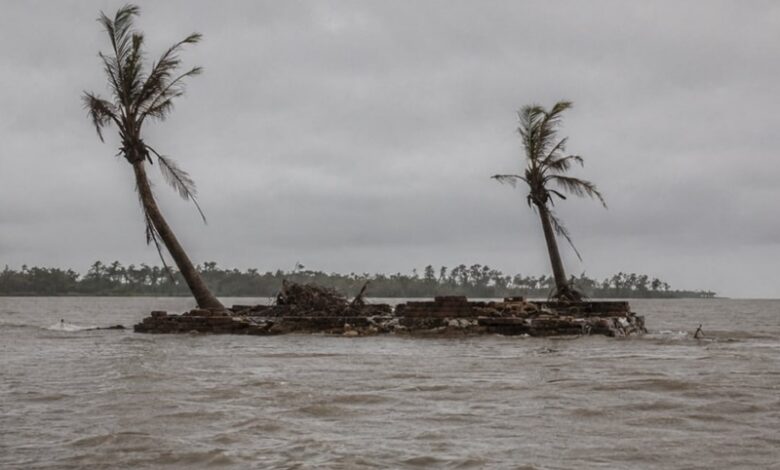
The Sundarbans is the largest mangrove delta on earth, shared between India and Bangladesh. But this world-famous forest is also home to a quieter crisis. Islands here are not eroding slowly in the background. They are vanishing within a single generation, and the people who lived on them are being pushed onto smaller and smaller patches of ground.Lohachara:
The Island That Disappeared First
Lohachara Island, once home to thousands of families, went under water years ago. It is often cited as one of the first inhabited islands in the world to be lost to rising seas and coastal erosion. Its former residents did not move because of a single storm. They left in waves, as tides ate away at their fields and homes one monsoon at a time. Many resettled on nearby Sagar Island, only to find that the same forces are now creeping toward their new homes too.
Ghoramara Today: A Shrinking Lifeline
Ghoramara Island tells a similar story, but it is still being written. Government data shows the island’s area fell from 8.59 square kilometers in 1969 to just 3.83 square kilometers in 2019. A report reviewed by India’s National Green Tribunal warns that nearly 40 percent of what remains of Ghoramara could vanish by 2042. Around 3,000 people already left the island after Lohachara’s submergence, and many who stayed now live within a few hundred meters of open water.Scientists point to a mix of causes: rising sea levels, fewer sediments reaching the delta because of upstream dams, stronger tidal currents, and repeated cyclones. Embankments built to hold back the water have offered only short-term relief, and many have failed during storm surges.
Why This Matters Beyond the Sundarbans
This is not only a local story. It is an early example of what climate scientists call slow onset displacement, where people are forced to move gradually rather than in one dramatic event. Coastal communities from Bangladesh to the Pacific Islands are watching similar patterns unfold, and the lessons from the Sundarbans apply well beyond Bengal.
What Island Families and Supporters Can Do
Register land and identity documents early, since proof of residence matters for resettlement and compensation claimsFollow local government and Sundarban Affairs Department advisories on embankment repair and evacuation routes.Join or form cooperative savings groups to build a small emergency fund before the next cyclone season.Diversify income through fishing, small trade, or seasonal migration for work, rather than relying on one source.Support mangrove replanting drives, which slow erosion and rebuild natural buffers.Stay in touch with panchayat and block development officers about compensation and relocation schemes.
More coastal climate updates.
Why Are Coastal Heatwaves Intensifying?
Find the reasons behind rising risks.
Which Cities Face Heavy Rain?
Check out the latest weather path.
Why Are Villages Relocating Now?
Explore the growing climate challenges.
How Do Mangroves Protect Coasts?
Discover nature’s coastal defense.
Why Are Flood Risks Growing?
Browse the latest infrastructure concerns.
Conclusion
The Sundarbans will not disappear in the distant future. It is disappearing now, one monsoon at a time, and Ghoramara’s shrinking coastline is a warning for every low-lying delta on the planet. Families here cannot stop the tides, but early planning, community support, and honest attention from the rest of the world can soften the blow. Lohachara has already gone under. What happens to Ghoramara next is still, just barely, within our control.