
UN Carbon Market Overhaul Explained: Why India and China Rejected Kyoto-Era Carbon Credits
UN Carbon Market Overhaul changes Kyoto-era carbon credit rules. Learn why India and China objected and what the reforms mean globally now.

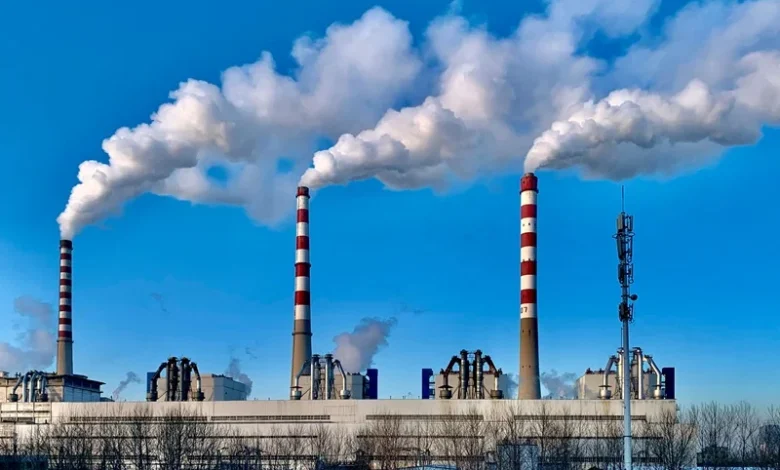
There has been heated discussions in light of the recent restructuring of the United Nations’ carbon market system in the wake of opposition by India and China over the decision to deny most carbon credits issued under the Kyoto protocol.
It has brought to light the existing tension between developed countries and developing nations regarding climate finance, emission reductions, and carbon trading. The proposed changes are meant to enhance transparency and environmental integrity; however, India and China feel that all carbon credits issued up to this point must not be worthless.
This has become one of the most anticipated issues in the world of climate policy.
What Is the UN Carbon Market?
The UN carbon market reforms refer to the process through which the existing system of carbon markets will be restructured based on the framework provided by Article 6 of the Paris Agreement.
Carbon markets are those whereby government and companies can generate or buy carbon credits through reduction of the emission of greenhouse gases. The carbon credits are then traded for the purpose of achieving climate targets.
The aim of such markets is to create an incentive for investment in renewable energy, conservation of forests, clean technologies, among others.
What Were Kyoto-Era Carbon Credits?
Prior to the signing of the Paris Agreement, the Kyoto Protocol had mechanisms such as the Clean Development Mechanism (CDM). This was an avenue through which developing countries could earn carbon credits for their emission reduction projects.
This led to India and China becoming some of the major credit earners through investment in energy production projects.
A lot of these credits have been stockpiled, and governments felt that these would retain their value in the new international carbon market.
Why Did the UN Change the Rules?
Among the major objectives of reforming the UN carbon market is the need to increase confidence in carbon trading.
Climate specialists have contended that most old carbon credits do not anymore reflect any real or additional reduction of emissions since they had been issued according to older standards.
Permitting the unlimited use of such credits, it has been suggested, would create an oversupply of cheap credits in the market and discourage countries and companies from engaging in new climate activities.
That is why the new rules place stricter limitations on the usage of old Kyoto credits within the new carbon market.
Why India and China Objected
It was argued by India and China that excluding most of the credits from the period of Kyoto Protocol would be an act of injustice against those nations that have already made investments in emission-reducing ventures.
This is because they see these emissions-reducing efforts as having been done in line with international regulations and thus the credits earned through such endeavors are indeed legitimate and need recognition.
In fact, by limiting them, these two nations argue that it will not only reduce the financial gain that they can get from such credits but also undermine future international climate accords.
Why This Matters Financially
This dispute is not only about policy but also about money. The value of carbon credits lies in the fact that they can be traded on the international market.
Should the credits accumulated during the Kyoto Protocol era become ineligible for trading within the new system, those governments and companies holding vast reserves would incur huge financial losses.
For such nations as India and China, who have accumulated numerous projects over several years, the issue becomes particularly critical.
What Does the UN Hope to Achieve?
Proponents of the new regulations claim that enhanced regulations would help boost the credibility of the global carbon market.
According to these proponents, improved carbon credits would ensure that each tradeable credit would represent a true and verifiable reduction of greenhouse gas emissions.
It is imperative to maintain the credibility of the Paris Agreement commitments through such reforms.
The other objective of these reforms is to address the problem of “double counting,” where the same reduction of emissions would be counted by several nations.
What Could This Mean for Future Climate Projects?
Overhaul of the UN carbon market may change how future climate projects are funded.
Developers will have to ensure that their project satisfies certain verification criteria before being awarded carbon credits.
Although this may make their projects more environmentally sound, it is likely to be an added cost burden on developing countries.
On the other hand, having strict standards may make investors more confident about investing in climate projects.
Why the Debate Is Far From Over
International carbon markets negotiations are extremely complicated.
For the developed nations, quality is key in order to achieve credibility on climate change issues, whereas for the developing nations, issues of fairness, historical responsibility, and climate finance are critical.
An example of the complexity in achieving a balance between ambitious environmental targets and economic equity is illustrated by the negotiation between India, China, and other nations.
This issue is expected to come up again in future negotiations on Article 6 of the Paris Agreement.
Conclusion
The reform in the UN carbon market is definitely one of the turning points in the way international carbon trading would be conducted in the coming years.
Although the reform seems to have been done to enhance transparency and credibility, the refusal of limits on Kyoto era carbon credits from India and China has a lot more underlying implications of unfairness and finance.
As global negotiations regarding climate keep going on, the result of this conflict may shape the carbon market for many more years to come.
The controversy over Kyoto era carbon credits is not only about outdated emission data; it is much more about the balance between the environment and economics in the struggle against global warming.
Explore more global climate and energy stories.
Which Nations Lead Battery Storage?
Check out the countries investing heavily in energy storage projects.
Where Can You Enjoy Tropical Holidays?
Browse the best island destinations for a warm Christmas escape.
Why Is UN Climate Ruling Historic?
Find out what the World Court resolution means for climate action.
Where Can You Learn Climate Better?
Dive into trusted sources that explain climate change with clarity.
What Is Water Bankruptcy Really?
Uncover why the UN warns this growing crisis demands global attention.