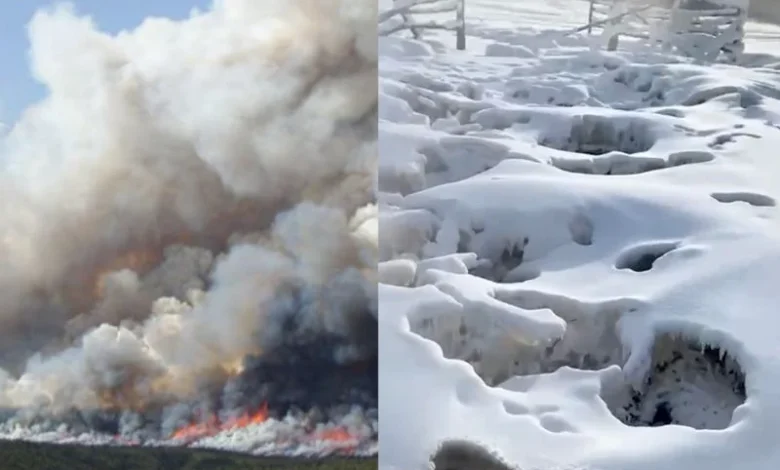
Some fires will not go out. They smolder under the snow and reappear in the spring. Scientists have labeled them as zombie fires, and climate change may contribute to more occurrences of their occurrence.
What are Zombie Fires?
Also known as overwintering fires, these fires stay active throughout winter. They have been discovered in Alaska, Canada and Siberia.
How Do They Survive?
For a long time, it was believed that they smoldered in peat. However, a study of nine areas showed that many of them used trees as pathways, instead of peat. In order to survive in freezing temperatures, fires must reach extremely high temperatures and burn deep down.
How Common Are They?
- Usually very limited: only 1 percent of fire activity in Alaska and Canada Northwest Territories from 2002 till 2018 occurred due to zombie fire activity.
- Occasionally, large: one year the fires accounted for 38 percent of the region activity.
- Possibly underestimated: models do not capture the smoldering stage.
Why It Matters
The importance of boreal peat is its capacity to store carbon and to insulate the permafrost underneath. If carbon-rich soil catches fire, it emits CO2 and methane. Experts predict that “zombie” fires will proliferate due to the increase in temperatures and dryness, but the consequences of such fires for world emissions are still unclear. The speed of warming in the Arctic is much greater than that of the rest of the world, while advanced scouting allows fire managers to prepare for a severe year.
Track the latest climate changes.
Is Your Seafood Becoming Riskier?
Find how El Niño affects ocean pollution.
Why Are Heatwaves Getting Worse?
Check out the link between monsoons and El Niño.
What Happens During Super El Niño?
See the major weather changes ahead.
Could Food Prices Rise Soon?
Uncover how climate affects grocery costs.
How Will Weather Patterns Change?
Get to know this summer’s biggest climate shifts.