Bornean Orangutans Trapped as Indonesia Forest Fires Destroy Borneo’s Last Refuges

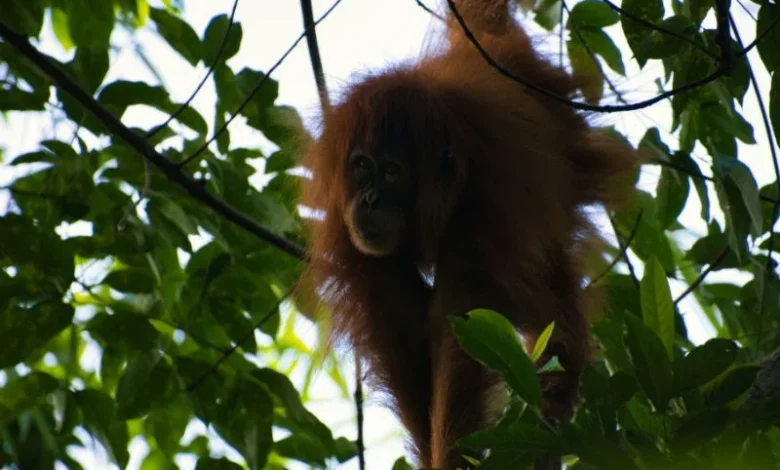
Picture a forest fire moving in from three directions at once, with nowhere left to run. That’s roughly what’s happening right now to Bornean orangutans in West Kalimantan. As Indonesia forest fires tear through the island this dry season, one of the world’s most endangered great apes is being squeezed into smaller and smaller patches of unburned trees.
A National Park Under Fire
Gunung Palung National Park has long been one of the last strongholds for wild orangutans, sheltering around 2,500 of them and hosting one of the longest-running orangutan research projects anywhere. That reputation is now under threat. Flames have crept inside the park itself, scorching close to 9,000 hectares, roughly half the size of Washington, D.C. Researchers, field staff and villagers have spent weeks digging firebreaks by hand and rigging up makeshift sprinklers just to keep the fire away from their research camps.
The Mendawak Corridor and Beyond
Right next to the park sits the Mendawak Biodiversity Corridor, a messy but important stretch of village forests, oil palm land and pulpwood concessions thought to hold somewhere between 800 and 1,700 orangutans. Nearly half of one of its key forest blocks has already gone up in smoke. A lot of the damage is happening on peatland that was drained years ago for plantations. Once peat dries out like that, it burns easily, and it can smoulder underground for weeks without anyone noticing.
Here’s what’s already unfolding on the ground:
- Rescue teams have pulled more than 20 orangutans out of burning or surrounded forest
- One adult male orangutan died after breathing in too much smoke, which damaged his lungs and heart
- Villages near the fires are dealing with thick haze that’s affecting their own health too
Why This Matters Beyond Indonesia
It’s tempting to think of this as a local problem, but it isn’t really. Borneo’s peat forests hold huge amounts of carbon that took thousands of years to build up, and when that peat burns, the emissions go straight into the atmosphere everyone shares. On top of that, every hectare lost pushes an already critically endangered species one step closer to disappearing from the wild altogether.
What Actually Helps
People working on the ground say waiting for fires to start is already too late. What’s making a difference instead:
- Finding and mapping old water sources and bore wells before the next dry season hits
- Blocking drainage canals so peatland stays wet instead of drying out
- Training village fire teams in advance, not scrambling once smoke is already in the air
Conclusion – Indonesia forest fires
What’s happening in Borneo right now is a hard reminder that a shrinking forest eventually becomes a trap, not just for wildlife but for the people living alongside it. The real fix isn’t fighting fires as they happen, it’s keeping the land wet enough that fires struggle to start in the first place.
More stories on extreme weather.
Why Is Bangladesh Facing Flood Risks?
Find the latest climate insights.
What’s Driving India’s Weather Split?
Check out the extreme weather patterns.
Is Sonamarg Travel Safe Today?
Get to know the latest advisory.
How Severe Are China’s Floods?
Browse the latest emergency updates.
Why Is Northeast India Flooding?
Uncover the unusual jet stream effects.