Fungi’s Hidden Kingdom: Why Scientists Say We’ve Only Identified 5% of All Fungal Species
Scientists estimate Hidden Fungal Species make up millions yet remain unknown. Learn why they matter for nature, medicine, and research today.

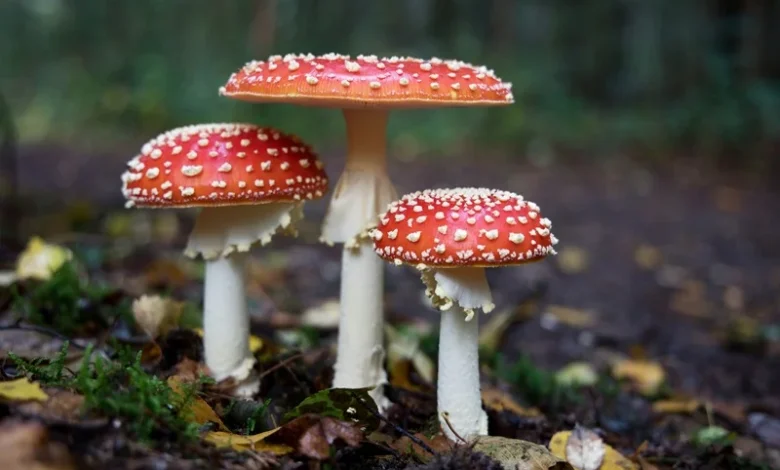
Among the least explored kingdoms in nature are the world’s fungal species. Scientists believe there are approximately 2.5 million species of fungi, but only a fraction of them have been formally identified and named. Thus the hidden kingdom of fungi may contain millions of organisms unknown to science.
Why So Many Fungi Are Unknown
Mushrooms are only one of the fungi you can find in forests or markets. Many are microscopic and live in soil, plants, insects, water and rotting material. Others are found only in specific environments and are therefore hard to come by.
The scientists have another problem. Two fungi can appear nearly identical and be genetically distinct species. Therefore, modern DNA testing is becoming an important tool for identifying organisms that cannot be reliably separated on the basis of appearance alone.
The Secret Kingdom of Fungi Is Everywhere
Fungi are present in nearly all habitats on earth. They can live in tropical forests, deserts, glaciers, oceans and also in urban spaces. They have symbiotic relationships with plant roots, helping the plants to get nutrients and water. Some break down dead matter and recycle nutrients to ecosystems.
“People look under the soil and their importance is more evident. A large fungal network can connect with plant roots and affect how forests and grasslands operate.
Why finding new species of fungi matters
Discovering unknown fungi is not simply a matter of adding new names to scientific records. New species may yield useful compounds for medicine, agriculture, and environmental technology.
Already fungi have had an important role in medical discoveries, such as antibiotics. And now, scientists are exploring fungal chemistry for new medicines and other useful products.
Undiscovered fungi can also help scientists understand soil health, plant diseases and natural decomposition, and their genetic diversity may offer solutions not yet explored.
Technology Is Transforming Fungal Discovery
Scientists are now using DNA sequencing to study fungi that are difficult to cultivate in the laboratory. They can collect samples from the environment and analyze genetic material to identify organisms that may not be detected by traditional approaches.
Digital databases are also helping researchers in different countries to compare specimens and share information. Trained observers document visible mushrooms and other fungi, and citizen science can help too.
People can help promote responsible research on fungi by:
•Fungi-watching without damaging wild habitats.
•Documenting rare fungi via credible biodiversity platforms.
•Never eat an unidentified wild mushroom.
Supporting forest, wetland & grassland conservation.
•Reliable sources to learn about local fungal diversity.
Why the 5% is Important
The 5 percent figure used by many as a standard should be taken as an estimate, not a precise global number. Scientists don’t always agree because it is hard to sample and classify fungi. Recent research suggests that there are millions of species of fungi, which just goes to show how little we know.
The uncertainty is in itself a warning. Species may go extinct before scientists can discover them due to habitat loss and climate change.
Conclusion
The secret kingdom of fungi reveals how much of Earth’s biodiversity is still unknown. “With better DNA technology, international cooperation and more conservation, scientists can find species that may have great ecological and practical value.”
More biodiversity stories to explore.
How Do Birds Reveal Nature?
Discover how bird songs reflect ecosystem health.
Why Do Biodiversity Hotspots Matter?
Find their role in tackling climate change.
What Is Driving Wildlife Loss?
Uncover the biggest threats to global biodiversity.
Can Nature Recover By 2030?
Look into global goals to restore biodiversity.
What Threatens Biodiversity Next?
See the hidden risks scientists are tracking.