Rare Moth and Lichen Association Discovered in the Himalayas, Revealing a New Camouflage Secret

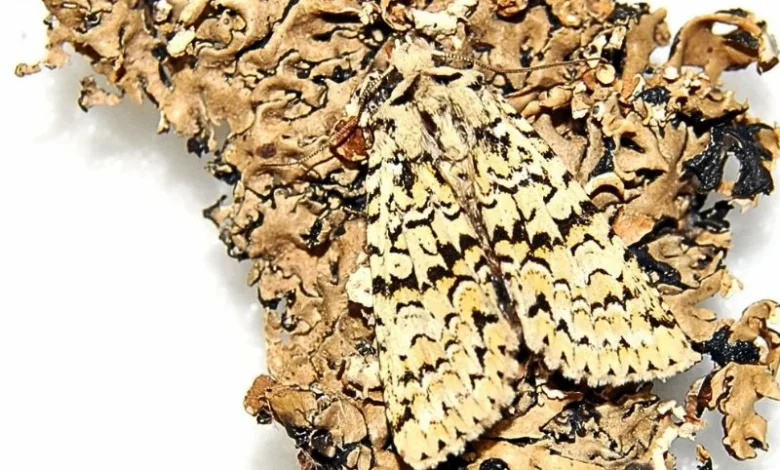
High up in the Himalayas, a tiny discovery is quietly reshaping how scientists look at insect survival. Moth lichen camouflage, Researchers came across a moth and lichen association where a moth sat on a rock lichen, its wings matching the lichen’s pattern so closely that it nearly vanished from sight. This simple field sighting, made in a remote wildlife sanctuary, has opened a fresh line of thinking about how small creatures stay alive in harsh mountain terrain.
What Researchers Found in the Himalayas
The sighting happened in July 2025 at Duggi, inside the Kugti Wildlife Sanctuary in Chamba district, Himachal Pradesh, at an altitude of around 3,200 metres. A moth from the Noctuidae family was found resting on a lichen called Lasallia pertusa, a species with an unusual, irregular, almost perforated surface. The moth’s colouring matched the lichen texture so well that even trained observers struggled to spot it at first glance. According to the researchers, this is the first time this particular lichen species has been connected to moth camouflage, which is what makes the record genuinely rare.
Why This Camouflage Discovery Matters
This kind of hiding behaviour is called crypsis, where an animal’s body pattern blends into its surroundings well enough to confuse predators such as birds and lizards. Lichen based camouflage in moths is not new on its own, but earlier cases usually involved flatter lichens growing on tree bark. This record stands apart because Lasallia pertusa has a complex, leaf like shape, which shows that even unusual lichen growth forms can act as a natural shield for insects living at high altitude.
A Small Clue With a Bigger Story
The study is based on direct field observation rather than a lab experiment, so it does not prove how effective this camouflage strategy really is against predators. Even so, it adds one more piece to a much larger puzzle about how mountain ecosystems function. Every rock, moss patch and lichen covered surface in these high altitude zones may be quietly supporting survival strategies that stay hidden until someone takes the time to look closely.
For readers who enjoy nature walks or hill trails anywhere in the world, a few simple habits can help:
- Walk slowly and check rock surfaces, not just trees and flowers
- Avoid touching or disturbing lichen patches, since they take years to grow back
- Report unusual insect or wildlife sightings to local forest or biodiversity offices
- Choose responsible, low impact tourism when visiting protected sanctuaries
Conclusion – Moth lichen camouflage
This rare moth and lichen association is a gentle reminder that nature often tucks its most interesting stories into the smallest, easiest to miss details. The next time you walk past a quiet, lichen covered rock, remember that something might be resting there, perfectly disguised, right in front of you.
Track the latest climate changes.
Is Your Seafood Becoming Riskier?
Find how El Niño affects ocean pollution.
Why Are Heatwaves Getting Worse?
Check out the link between monsoons and El Niño.
What Happens During Super El Niño?
See the major weather changes ahead.
Could Food Prices Rise Soon?
Uncover how climate affects grocery costs.
How Will Weather Patterns Change?
Get to know this summer’s biggest climate shifts.