Zambia’s African Wild Dogs Set New Record for Longest Mammal Migration Ever Tracked

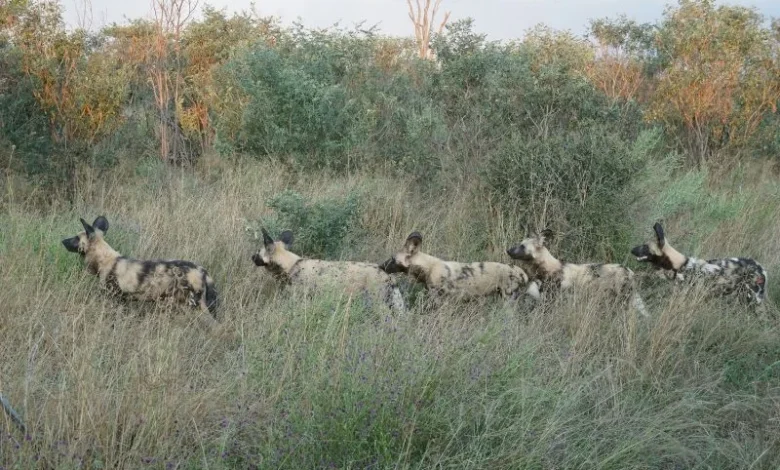
Every so often, a wildlife story comes along that makes you stop and rethink how far animals will go, quite literally, to survive. African wild dog migration, This time it’s three brothers from Zambia. A pack of young African wild dogs has just walked further than any land mammal on record across the continent, and researchers are calling it a genuinely rare find. What makes this new scientific study so interesting isn’t just the distance covered. It’s what the journey tells us about how connected, or disconnected, Africa’s remaining wild spaces have become.
What Actually Happened During This Journey
The three dogs, known to researchers as the Mayukuyuku males, set off from their birth pack in Kafue National Park sometime in mid-2025. They didn’t just wander to the next valley and settle down like most dispersing wild dogs do. They kept going. First east, then north past the industrial towns of Kitwe and Ndola, then back on themselves before finally pushing east toward the Luangwa River Valley.
By the time researchers caught up with the data in April 2026, the trio had clocked over 4,126 kilometers. To put that in perspective, that’s roughly half the distance you’d travel driving from Cairo to Cape Town. Scientists tracking the pack say it’s the longest dispersal ever recorded for the species, and honestly, the longest movement by any African mammal that anyone has documented.
Why Do Wild Dogs Even Travel This Far?
There’s a simple biological reason behind these long walks. Wild dogs won’t breed within their own family, so once males mature, they often need to cover serious ground before finding unrelated females and unclaimed territory.
A few things drive this behavior:
- Avoiding inbreeding by leaving the pack they were born into
- Hunting for territory that isn’t already occupied
- Depending on unbroken, connected land to move safely without running into danger
The Risks That Come With Every Mile
Not every dispersal story has a happy ending. A female wild dog, tagged EWD-1355, travelled more than 2,300 kilometers through Zambia and into Mozambique before she was killed by a wire snare, the kind typically set to catch bushmeat. Snares are still one of the deadliest threats these animals face, and because wild dogs won’t leave an injured pack mate behind, one snare can end up killing several animals at once.
Why Conservationists Are Paying Close Attention
Out of 19 wild dog groups fitted with tracking collars, several came within just a few kilometers of Angola, the Democratic Republic of Congo, Malawi, and Zimbabwe. That’s a strong sign that wild dog populations across the region are still, for now at least, connected to one another.
People involved in this conservation research argue that keeping these corridors open helps both animals and the communities living alongside them, particularly through eco-tourism and properly managed, legal game ranching that takes pressure off illegal snaring.
Conclusion – African wild dog migration
What this record-breaking trek really shows is that wildlife doesn’t stop at a map’s borders, and conservation planning shouldn’t either. Protecting these wide, connected landscapes isn’t a matter of choosing wildlife over people. It’s about finding a way for both to keep sharing the same ground.
More stories on extreme weather.
Why Is Bangladesh Facing Flood Risks?
Find the latest climate insights.
What’s Driving India’s Weather Split?
Check out the extreme weather patterns.
Is Sonamarg Travel Safe Today?
Get to know the latest advisory.
How Severe Are China’s Floods?
Browse the latest emergency updates.
Why Is Northeast India Flooding?
Uncover the unusual jet stream effects.