
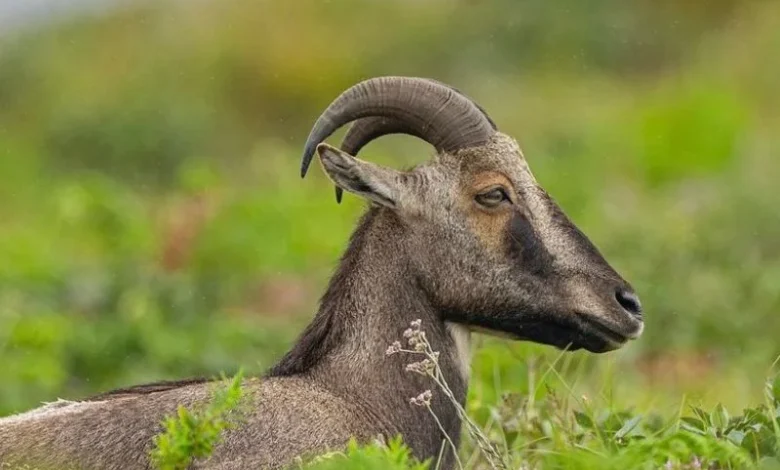
Somewhere high above the fog line in South India, there’s a goat that does something most animals wouldn’t dare try. Nilgiri tahr protection, It walks along cliff edges like they’re flat pavement. The Nilgiri tahr isn’t a well-known animal outside India, but it deserves to be. Its story touches on wildlife conservation, climate change, and what happens when a species runs out of room to hide. Here’s a closer look at the goat, the mountain it calls home, and why people far away should still care.
What Makes This Goat Different
Most goats graze in fields. This one lives on rock. The Nilgiri tahr is southern India’s only mountain-dwelling hoofed animal, and locals have a name for it that says everything: varayaadu, or “cliff goat.” Its hooves aren’t like a regular goat’s either. They have a soft, grippy underside that works almost like rubber, letting the animal balance on ledges that would send most creatures tumbling.
That climbing ability isn’t just a party trick. It keeps the tahr away from predators and gives it access to patches of grass that bigger animals can’t reach. Its home is the Western Ghats, a mountain range that runs along India’s west coast and happens to be one of the richest biodiversity zones on the planet. The largest group of tahr lives in Kerala’s Eravikulam National Park, while smaller populations hold on in Tamil Nadu’s Grass Hills and Mukurthi National Parks.
Why Numbers Are Falling
The tahr can handle a cliff face. What it can’t handle so easily is everything humans have built around it.
- Tea and coffee estates have eaten into the grasslands it depends on
- Dams, roads, and power projects have carved up its habitat
- Weeds and invasive plants have crowded out native grass
- Rising heat is forcing the goats to move further uphill, and there’s only so much “up” left
- Small, cut-off herds are now more prone to inbreeding and disease, including infections picked up from stray dogs near forest edges
A survey done in 2026 put the Tamil Nadu population at just over 1,300 animals. That’s a slight improvement from the year before, but it’s still a small number for a species split across isolated pockets of mountain.
How It’s Being Protected
India has given the tahr its strongest possible legal cover, Schedule I status under the Wildlife Protection Act, which puts it on par with tigers and elephants in terms of protection from hunting and trade. It’s also listed as endangered globally. On the ground, forest teams have started using drones to track the animals, since the tahr’s habit of climbing higher each year has made old-fashioned foot surveys nearly impossible.
What You Can Actually Do
You don’t need to book a flight to the Western Ghats to make a difference.
- Back conservation groups that work on ground-level habitat protection
- Think twice about products tied to plantations built on cleared forest land
- Talk about lesser-known species like the tahr instead of just the popular ones
- If you’re ever trekking in a protected park, report anything that looks off with the wildlife
- Keep pets and strays managed responsibly if you live near forest zones, since disease spread is a real risk to species like this
Conclusion – Nilgiri tahr protection
The Nilgiri tahr has spent thousands of years mastering cliffs that nothing else can climb. What it hasn’t mastered, and can’t, is surviving without the mountain itself staying intact. That part is on us. Protecting the Western Ghats isn’t just about saving one goat, it’s about keeping an entire mountain ecosystem breathing.
More stories on extreme weather.
Why Is Bangladesh Facing Flood Risks?
Find the latest climate insights.
What’s Driving India’s Weather Split?
Check out the extreme weather patterns.
Is Sonamarg Travel Safe Today?
Get to know the latest advisory.
How Severe Are China’s Floods?
Browse the latest emergency updates.
Why Is Northeast India Flooding?
Uncover the unusual jet stream effects.