
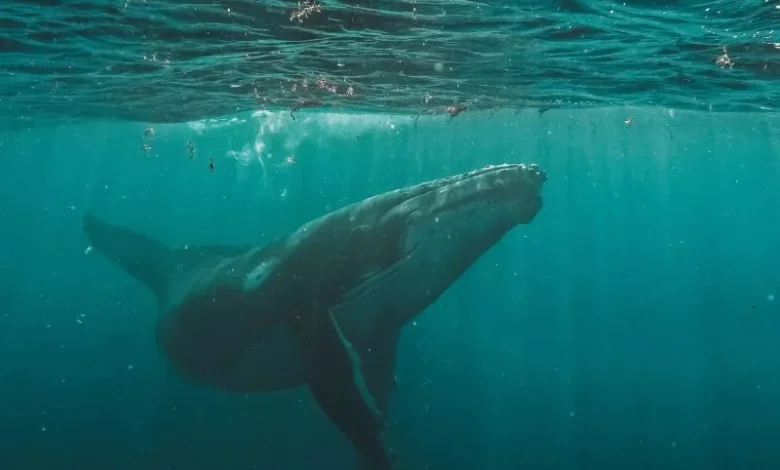
For centuries, thick sea ice sealed off the coast of East Greenland, keeping the world’s largest whales out. That barrier is disappearing fast. Giant whales greenland waters, A long-running scientific study has tracked hundreds of humpback whales, along with fin and minke whales, feeding along this coastline every summer, something that simply did not happen twenty years ago. Scientists say it is one of the clearest signs yet of how fast the Arctic is changing shape underwater.
How the Whales Are Reaching Greenland’s Coast
Ship surveys did not record a single humpback whale in the region until 2006. Only seven turned up in 2007. By 2024, researchers had logged around 150 sightings in one season alone. To piece this together, the team combined boat surveys, satellite tracking data from 15 tagged whales, and years of local knowledge shared by Inuit hunters who have watched these waters for generations.
The reason is straightforward. Warmer water means less ice, and less ice means whales can finally reach fish and krill that used to sit behind a frozen wall.
Why This Matters Beyond Greenland
- Rising sea temperatures are reshaping entire food chains, not just melting ice.
- Three whale species together are thought to eat over 800,000 tonnes of fish and krill each summer.
- The shift may be drawing whales away from West Greenland, a touchy subject where whaling is still practised under strict local rules.
- Ice-dependent species such as narwhals and belugas are losing ground and facing fresh competition for food.
A Region in Flux
Researchers are calling this a “regime shift,” meaning the ecosystem has settled into a genuinely new pattern rather than a passing blip. For baleen whales, that looks like an opportunity. For animals built for ice, it looks like a squeeze.
Quick Checklist: Understanding the Change
- Sea ice loss is opening up new coastal feeding grounds.
- Fish and krill stocks are shifting north as water warms.
- Whale sightings jumped from zero to over a hundred a season in under twenty years.
- Narwhals and belugas are competing harder for the same space and food.
- Long-term effects on whale populations are still being studied.
Conclusion – giant whales greenland waters
This is not just an Arctic curiosity happening far away. It’s an early look at how a warming ocean quietly rewrites who lives where, and those changes will eventually touch fishing communities, food supplies, and ecosystems well beyond Greenland’s coastline.
Explore More: Discover the Ideas and Innovations Shaping Tomorrow
Which Technologies Will Transform Industries Next?
Discover the breakthrough technologies that could reshape traditional industries and the future of work.
Why Are Wetlands So Important Globally?
Explore the world’s most important wetlands and learn why they are vital for nature and humanity.
Can Innovation Improve Renewable Energy Reliability?
Check out the latest innovations making renewable energy cleaner, smarter, and more dependable.
Which Countries Lead Green Living?
Discover the 2026 ranking of the world’s greenest countries and their sustainability achievements.
How Are Cities Fighting Climate Change?
Explore the cities investing in climate-resilient infrastructure to prepare for a changing future.