
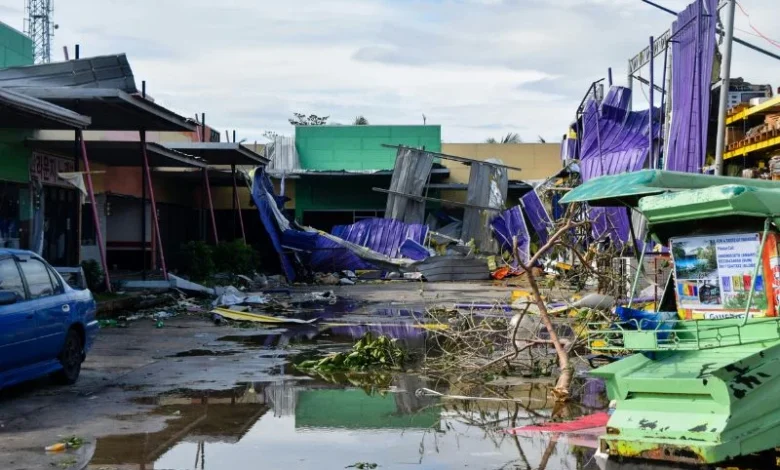
Some storms don’t need to touch land to cause a disaster. Typhoon Narra has been sitting over the Gulf of Tonkin for days now, and instead of crashing ashore in one dramatic hit, it has just kept dumping rain on the same stretch of coastline. Southern China and northern Vietnam are bearing the brunt of it. Rivers are overflowing, roads have vanished under muddy water, and families in both countries are being pulled from their homes by rescue boats. Typhoon Narra Floods, The storm never made landfall in the usual sense, and yet the damage on the ground looks like it did.
Why a Storm That Never Hits Land Can Still Cause This Much Damage
Here’s the thing about typhoons that stall instead of sweeping through: they’re often worse than the ones that pass quickly. When a storm parks itself in one place, the same patch of ground gets hit with rain over and over, with barely any time to drain in between. That’s basically what happened with Narra. Weather officials were clear that it wouldn’t make a direct landfall, but that turned out to be small comfort for the people watching water rise outside their windows.
China’s Guangxi Region Under Water
In China, the numbers give a sense of how serious this got. Around 54,000 people were relocated, and more than 8,000 of them ended up in emergency shelters. Fifteen rivers rose past their warning levels. Video out of Chongzuo city showed entire streets and low-rise buildings sitting under brown floodwater, with rescue crews wading through it in rubber boots or steering small boats between houses to reach people who were stuck. Forecasters are warning that Guangxi, along with Guangdong, Hainan and Fujian, should expect more of the same through midweek. This isn’t over yet.
Landslides and Lost Harvests in Northern Vietnam
Just across the border, Vietnam hasn’t fared any better. The mountainous provinces of Lang Son and Cao Bang got close to 300 millimetres of rain in a single day, which on steep hillsides is exactly the kind of downpour that triggers landslides. One death has already been confirmed, and over 4,300 households have had to leave their homes. On top of that, more than 10,000 hectares of rice and other crops were wiped out, which is a real hit for farming families who rely on that harvest to get by.
A Few Practical Steps If You’re in the Storm’s Path
- Keep an eye on local weather updates rather than assuming the worst has passed.
- Stay off flooded roads, even water that looks shallow can be far more dangerous than it seems.
- Charge your phone whenever you can, since power outages tend to follow these storms.
- Back up important documents and contact numbers somewhere you can reach without power.
- Don’t wait for an official evacuation order if you can already see water rising near you.
Conclusion – Typhoon Narra Floods
What’s happening with Typhoon Narra is a good reminder that the actual landfall isn’t always the part that does the most harm. The rain sticking around is doing plenty of damage on its own, and with power already cut to roughly 55,000 families and more downpours expected, things could still get worse before they get better. If you’re anywhere near the affected regions, staying tuned to official alerts and moving early is genuinely the smartest thing you can do right now.
Explore More: Discover the Ideas and Innovations Shaping Tomorrow
Which Technologies Will Transform Industries Next?
Discover the breakthrough technologies that could reshape traditional industries and the future of work.
Why Are Wetlands So Important Globally?
Explore the world’s most important wetlands and learn why they are vital for nature and humanity.
Can Innovation Improve Renewable Energy Reliability?
Check out the latest innovations making renewable energy cleaner, smarter, and more dependable.
Which Countries Lead Green Living?
Discover the 2026 ranking of the world’s greenest countries and their sustainability achievements.
How Are Cities Fighting Climate Change?
Explore the cities investing in climate-resilient infrastructure to prepare for a changing future.