
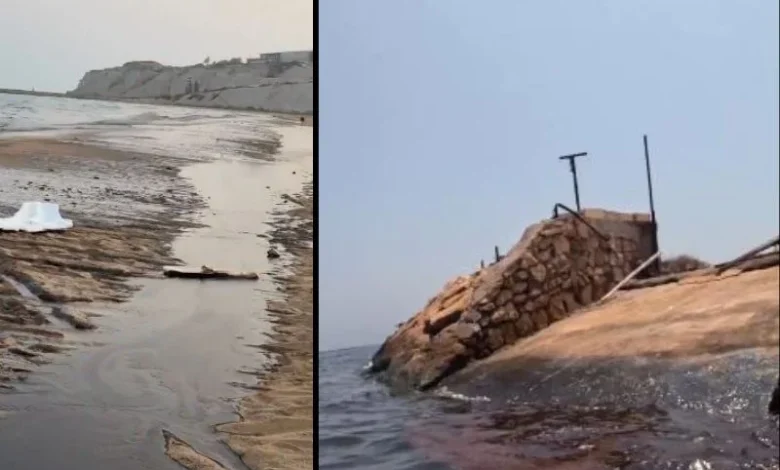
The Gulf holds some of the largest oil reserves in the world, and that resource has been weaponised repeatedly in conflict. Wars in the region have wrought environmental damage on a scale rarely seen elsewhere since the 1980s, making coastlines, aquatic environments, and air quality casualties alongside human lives. Gulf oil pollution, A lot of this damage was never an accident. Oil was deliberately released or set alight in a number of cases as a wartime tactic, and it is one of the earliest examples of pollution being deliberately used as a weapon.
The Oil Spill of the 1991 Gulf War
The most famous case is still the 1991 Gulf War. As coalition forces moved to free Kuwait, retreating Iraqi troops opened valves on the Sea Island pipeline, spilling oil from many tankers into the Persian Gulf. The result was one of the largest oil spills recorded, with estimates pointing to well over 200 million gallons of crude oil entering the water. The move was reported to be to stall a possible coalition beach landing, but the military benefit was limited.
Iraqi troops in retreat set fire to more than 600 Kuwaiti oil wells as the spill occurred, in a scorched-earth policy intended to slow the coalition’s advance. The fires burnt for months, and the last well was capped in November 1991 after Kuwaiti firefighters and international crews put out the blazes.
The Harm Done
The amount of pollution that came from these events was staggering. Smoke and soot from the burning wells formed a hardened layer known as tarcrete, which covered more than 1,000 square kilometres of Kuwait’s deserts. Crude oil spilt from storage units, damaged pipelines and tankers eventually fouled some 800 kilometres of Gulf coastline. The immediate, severe and long-term effects on air and land quality, terrestrial and marine habitats and biodiversity represented a threat to natural resources and to human health.
Years later, the pollution still hadn’t fully cleared. A decade after the war, scientists found some 280 million cubic feet of oil-contaminated sediment sitting along the Saudi Arabian shoreline, much of it fouling nearby marshlands. The cost to marine life was also high, with damage to coastal habitats along the Saudi Arabian coast considered almost irreversible in places. The Kuwaiti, Iraqi and Iranian coastlines suffered comparatively less damage.
Gulf War Pollution Was Not the Only War That
The war of 1991 was not an isolated case. The earlier Iran-Iraq war of the 1980s also left a lasting oil pollution stain on Gulf wildlife. Spills from that conflict have been linked to the almost complete destruction of the hawksbill turtle population of the Gulf and a large percentage of the green turtle population of the Gulf.
More recently, rising strikes between Israel, the US and Iran have once again raised alarms over oil infrastructure becoming a target, with experts noting that the targeting of tankers and production sites during the Iran-Iraq war makes it reasonable to worry about oil pollution returning to the Gulf’s coastal and marine environment.
Why It Takes So Long to Repair the Damage
Oil pollution in the Gulf tends to persist much longer than in many other marine environments. The Gulf is shallow, semi-enclosed, and already stressed from decades of extraction, coastal development and rising temperatures that slow natural recovery.
Scientists in 2010 discovered that oil residues along Saudi Arabia’s coasts were still deadly to bottom-dwelling marine life 12 years after the 1991 war, with full recovery expected to take decades.
A pattern that keeps repeating itself
Every flare-up of conflict in the Gulf brings with it the risk of oil-related environmental damage, whether through deliberate sabotage, strikes on energy infrastructure or simply the density of oil facilities in a small contested region. Even decades after the 1991 disaster, the Gulf’s ecosystems bear scars from that war, a reminder that the environmental cost of conflict here rarely stops with the fighting.
Discover smarter ways to go green.
How Can You Cut Emissions?
Check out simple ways to reduce your footprint.
How Much Energy Does AI Use?
Find the hidden environmental costs.
Which Small Habits Make Difference?
Uncover easy actions with big impact.
How Green Is Film Production?
Dive into cinema’s environmental footprint.
What Are The Best Eco Steps?
Explore practical ways to lower emissions.