
From Mud Roofs to Concrete: Climate Change Threatens Ladakh’s Historic Architecture

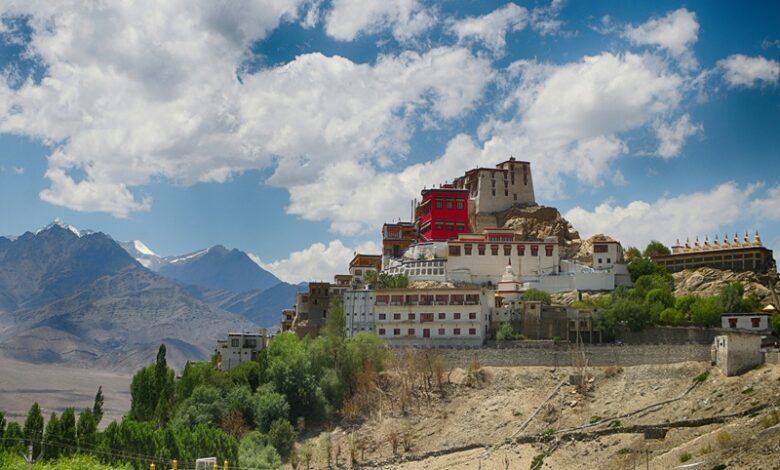
In the cold desert region of Ladakh, high in the Himalayas, people have been building their houses in much the same way for centuries, with thick walls and flat roofs of mud and timber beams from local poplar and willow trees. This design worked great in an area with infrequent rain. But climate change is bringing sudden, heavy downpours to a region never built to handle water, and it is quietly pushing families away from the very architecture that defined their homeland.
Why are mud roofs falling apart?
Ladakh is in a rain shadow, so the mountains surrounding it keep most of the clouds of the monsoon away. For hundreds of years this meant almost no rain so flat mud roofs made perfect sense. There was simply nothing to save.That’s changed. Short bursts of intense rain, unheard of a generation ago, are now commonplace in summer.
The mud roofs soak up the water, grow weak, and drip into the rooms under. If water gets into a mud wall, it will lose its strength and fall apart.
The Expensive Transition to Tin and Concrete
Families in Leh and surrounding villages are responding the only way they can, by turning to materials mud cannot compete with in wet weather.
•The old mud roofs are being replaced by corrugated tin sheets, sometimes costing more than Rs 280,000 for a single house.
•Instead of the traditional roofs, reinforced concrete slabs are being used in newer houses.
•In the mountain pass villages, tin roofs gleam where mud once blended with the landscape.
That is not a question of taste. That’s a necessity, residents say, because today’s rainfall patterns don’t match architecture built for yesterday’s weather.
What This Means for Heritage and Everyday Life
The damage is not only to individual homes. Water seepage is also damaging carvings and wall paintings inside Buddhist monasteries, buildings never designed with drainage in mind.
Old methods of preserving food, such as keeping cheese in wooden basements through the winter, are also becoming harder to maintain as dampness seeps in.Concrete has its own tradeoff. It is much better in the rain but does not hold heat like mud walls do so homes are colder in Ladakh’s brutal winters.
Some Practical Steps Communities Are Doing
Improving the drainage and slope of the roof, not eliminating mud altogether.Using stabilized compressed earth blocks, a mix of soil and cement, to improve water resistance.Check with local conservation groups before any major renovation.Selection of new materials for insulation and waterproofing.
Conclusion
Ladakh’s mud architecture had withstood extreme cold for centuries but had never been designed to withstand rain. Weather patterns are changing and families are forced to choose between heritage and protection without much help doing either well. Preserving Ladakh’s identity will mean finding ways of building that respect the old ways while really standing up to the new climate. In silence, Ladakh’s roofs are changing, and so is its story.
Explore More Clean Energy Stories
Why Oppose Deep-Sea Mining Now?
Discover why global protests are growing.
Is Clean Energy Winning Today?
Check out how renewables are overtaking fossil fuels.
Why Is COP30 Facing Backlash?
Find the latest clean energy debate.
How Does Green Fuel Help?
Look into sustainable aviation fuel benefits.
Why Is Solar Now Cheaper?
See how solar beats fossil fuel costs.