Do Wetlands or Mangroves Store More Carbon? A Fresh Look at Nature’s Best Carbon Vaults
Mangroves vs Wetlands compares carbon storage, methane emissions and coastal protection, explaining which ecosystem stores more carbon naturally.

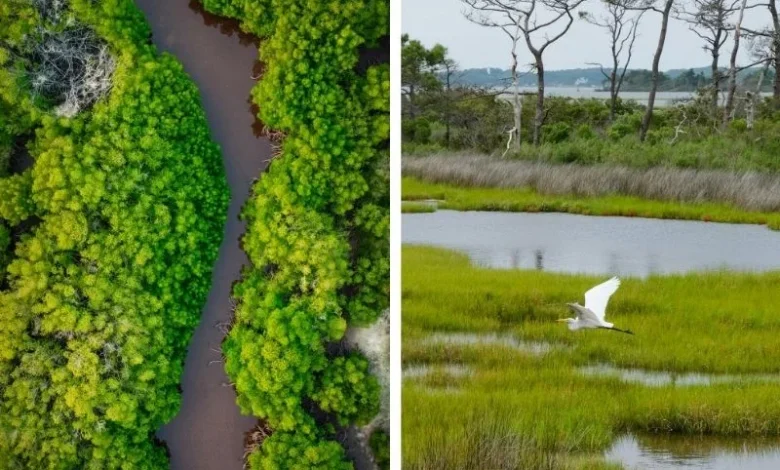
Carbon sequestration in nature is no longer a scientist’s topic. “This affects fish catches, safety along the coast and even climate funding to coastal communities. wetlands and mangroves are two of Earth’s quietest climate heroes, and people often think they do the same job. They don’t.
Why Wetlands Are Good Carbon Stores
Wetlands include marshes, swamps, peatlands and river deltas. The waterlogged soil lacks oxygen, so dead plants decompose very slowly rather than releasing carbon back into the air. This is why peatlands are able to store carbon for centuries. Not all wetlands are equal, however. Freshwater wetlands are also often sources of methane, a gas that traps far more heat than carbon dioxide, which may offset some of their climate benefit.
Why mangroves are often the better choice
Mangroves are technically a type of coastal wetland, but their salty, tidal soils act differently. Mangroves trap carbon more cleanly; salt keeps the methane-producing bacteria at bay. Studies suggest that mangroves and other coastal wetlands can sequester three to five times more carbon per acre than tropical forests, and much of that carbon is stored below ground in root systems and mud, not in the trees themselves.
The real difference is where
•Mangroves remove carbon mainly from soil, shielded from oxygen and decay.
•Freshwater wetlands sequester carbon in soil but commonly emit methane.
Mangroves also protect coastlines from storm surges, which inland wetlands cannot do.When drained or cleared for farming or shrimp ponds, both ecosystems rapidly lose their stored carbon.
Why it matters outside of science
Countries with extensive areas of mangrove coastline, such as Indonesia, Bangladesh and the Philippines, are increasingly linking the protection of mangroves to carbon credit schemes and coastal livelihoods. Local governments and cooperatives sometimes have replanting programs. Community groups can track the project transparency on platforms like the Ramsar Convention wetland registry. For ordinary people who don’t have land, the easiest avenue is typically to join a neighborhood mangrove-planting group or support bona fide blue carbon projects.
A Simple Checklist to Get Involved
•Check if there is a nearby mangrove or wetland conservation program along your coast.
•Steer clear of seafood from shrimp farms that have been built on cleared mangroves.
•Locally organized replanting drives by barangays, panchayats or municipal councilsBefore donating money,
•ask local environment offices about blue carbon credit projects.Share accurate information.
•Mangroves and wetlands are often confused in everyday conversation.
Conclusion
Wetlands and mangroves are impressive carbon vaults, but mangroves tend to be better because the salty soils slow decay and reduce the loss of methane. Protecting one or the other ecosystem protects coastlines, food systems and long-term climate stability. Share this comparison next time someone assumes all wetlands work the same way, because informed communities protect nature better than assumptions ever will.
More stories on nature and climate.
Why Save Mangalavanam’s Mangroves Today?
Discover why this ecosystem matters.
Which Mumbai Areas Flood First?
Check out the highest-risk zones.
Why Is Mumbai Getting Hotter?
Find the reasons behind rising heat.
Why Do Wetlands Need Protection?
Learn why these ecosystems matter.
How Is Heat Changing Forests?
Dive into the growing climate impact.